

Carried by 51 nurseries
View Availability at NurseryData provided by the participants of the Consortium of California Herbaria
View additional distribution information on the Jepson eflora
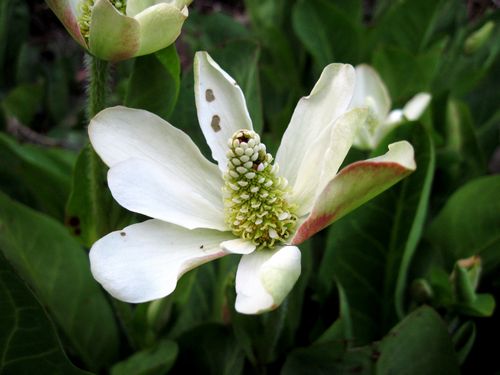
Yerba mansa or lizard tail, is a perennial flowering plant within the family Saururaceae. It is the only species in the monotypic genus Anemopsis. It is native to southwestern North America. In early spring numerous tiny white flowers are borne on a cone which is surrounded by 4-9 large white spoon-shaped bracts that look like petals. As it matures, the visible part of the plant develops red stains, eventually turning bright red in the fall. Yerba mansa means "calming herb" in Spanish (yerba = "herb"; mansa = "calm or tranquil").
Yerba Mansa requires moist soil, so best to plant in streambeds, seeps or other damp areas. It goes dormant and basically disappears from late summer to early winter, and re-sprouts from the roots in late winter. It produces beautiful white flowers in the early spring that remain on the plant until it starts to go dormant in late summer. It will often spread out like a carpet throughout the damper soil, and choke out any other plants in the area, and in particular while it's blooming, it's quite beautiful.
Perennial herb
4 - 12 in Tall
2 ft Wide
Upright, Spreading
Fast, Moderate
Winter Semi-deciduous
Pleasant

White, Cream, Red
Spring, Winter
Water features or wet habitats, Groundcover, Deer resistant
Partial Shade, Full Sun
High, Moderate
Keep moist
Easy
Tolerates cold to 0 - 5° F
Medium, Slow, Standing
Tolerant of almost any soil as long as it remains constantly moist.
Soil PH: 5.0 - 9.0
Runners may be cut off at any time to control its tendency to spread. Larger patches may be mowed.
Cut off runners may be transplanted to other damp locations and will root quickly. For propagating by seed: No treatment.
3, 6, 7*, 8*, 9*, 10*, 11, 12, 14*, 15*, 16*, 17*, 18*, 19*, 20*, 21*, 22*, 23*, 24*
Saline or alkaline soil, wet or moist places, seeps, springs, muddy creek banks, pond margins, bogs
Bogs, Freshwater Marsh, Lakes and Ponds, Meadows, Riparian Woodland, Valley and Montane Riparian Woodland
Yellow Monkeyflower (Mimulus 'Yellow'), Scarlet Monkeyflower (Erythranthe cardinalis), Stream Orchid (Epipactis gigantea), various Rushes, various sedges, Iris spp., Equisetum spp.