

Carried by 7 nurseries
View Availability at NurseryData provided by the participants of the Consortium of California Herbaria
View additional distribution information on the Jepson eflora
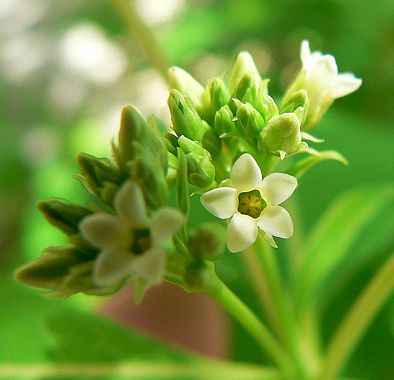
Dogbane (Apocynum cannabinum) is a perennial herb in the Apocynaceae (Dogbane) family native across much of North America. It typically grows in open, sunny areas such as streambanks, roadsides, and meadows, especially in moist or seasonally wet soils. As the common name suggests, dogbane is toxic to dogs, livestock, and humans if ingested.
The plant has upright stems that can reach 3 to 5 feet tall and produce clusters of small, pale greenish-white to pink flowers in summer. The leaves are opposite and lance-shaped. Dogbane has a milky sap which can cause blisters if handled without gloves, and spreads aggressively through rhizomes. Traditionally, Indigenous communities use the strong fibers from its stems to make cordage, nets, and other items—hence the name “Indianhemp.”
This plant is useful in restoration and pollinator gardens, as it supports native bees, butterflies, and other insects. However, it can be too vigorous for small garden spaces.
Perennial herb
3 - 7 ft Tall
Upright
Moderate

Cream, White, Brown
Summer
Partial Shade
Low, Moderate
Fast
Prefers moist sandy or gravelly soil.
1*, 2*, 3*, 4, 5, 6*, 7*, 8*, 9*, 10, 14*, 15*, 16*, 17*, 18*, 19*, 20*, 21*
Moist places
Chaparral, Foothill Woodland, Lodgepole Forest, Red Fir Forest, Valley Grassland, Yellow Pine Forest, Wetland-Riparian
Butterflies and moths supported
1 confirmed and 3 likely
Dogbane Saucrobotys
Saucrobotys futilalis
Clio Tiger Moth
Ectypia clio
Purple-Lined Sallow
Pyrrhia exprimens
Tacoma Cutworm
Trichordestra tacoma