

Carried by 35 nurseries
View Availability at NurseryData provided by the participants of the Consortium of California Herbaria
View additional distribution information on the Jepson eflora
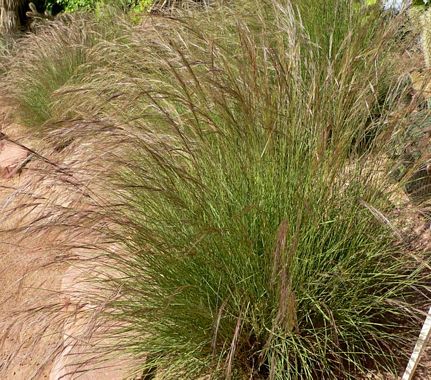
Purple three awn (Aristida purpurea) is a perennial bunchgrass known for its graceful, upright form and striking seed heads. The base of the plant appears green, while its feathery seed heads range in color from light brown to reddish-purple, creating a dynamic visual effect as they sway in the wind. This resilient grass thrives in various habitats across the United States, including deserts, mountains, and coastal regions.
Purple three awn's seeds provide food for some songbirds, supporting wildlife in natural landscapes. The grass also serves as a valuable native alternative to invasive species, offering a durable and low-maintenance option for landscaping. Its dense root system helps stabilize the soil and creates a matrix that supports the growth of wildflowers, enhancing biodiversity.
Purple three awn is a tough and attractive plant, its seeds can be sharp and may become a nuisance in areas with heavy foot traffic. The grass self-seeds readily, so it is important to manage young plants to prevent unwanted spread.
This hardy bunchgrass is a beautiful addition to native gardens and restoration projects, offering both aesthetic value and ecological benefits.
Grass
2 - 3 ft Tall
2 ft Wide
Fountain
Evergreen
None

Red, Purple, Cream, Brown
Spring, Winter
Groundcover, Lawn alternative
Full Sun
Very Low, Low
Max 1x / month once established
Easy
Tolerates cold to -20° F
Fast, Medium
Tolerates a variety of soils.
Soil PH: 6.5 - 7.5
Avoid cutting back the plant if possible. Remove old seed heads by gently pulling.
By seed. This plant readily seeds itself and, like other grasses, it can be mildly invasive in the garden. New young plants can be easily removed by pulling.
Sandy or rocky soils, slopes, plains
Coastal Sage Scrub, Creosote Bush Scrub, Joshua Tree Woodland
Can be used with a very wide variety of other plants from the mountains, deserts or coast. Examples include Creosote Bush (Larrea tridentata), Sagebrush (Artemisia spp.), Joshua Tree (Yucca brevifolia), Brittlebush (Encelia spp.), Buckwheat (Eriogonum spp.), and various cactus and succulent species.
Lady Bird Johnson Wildflower Center. (n.d.). Aristida purpurea – Purple Three Awn. https://www.wildflower.org/plants/result.php?id_plant=arpu9