

Carried by 68 nurseries
View Availability at NurseryData provided by the participants of the Consortium of California Herbaria
View additional distribution information on the Jepson eflora
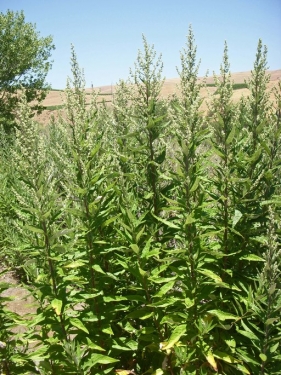
Mugwort (Artemisia douglasiana) is a fast growing shrub chosen primarily for its aromatic gray foliage which makes a year round contrast behind other plants. The beautiful, silver gray leaves add texture and color to the garden. It grows to 4 feet high by 5 feet wide and will spread by underground rhizomes, especially in moist areas.The flowers are small and inconspicuous, often not producing viable seed.
It does best in the sun but will tolerate shade. As it is native to riverbeds and other moist places it is vigorous if given water, but will tolerate drier conditions. Dead stems cut back in the winter will resprout in the spring.
Mugwort is sometimes grown for medicinal purposes. It is also useful in restoration projects and for erosion control.
Various insects are attracted to the flowers and it hosts a likely total of 28 species of butterfly and moth.
Perennial herb
8 ft Tall
4 ft Wide
Upright
Fast
Winter Deciduous
Pleasant

Yellow, Cream, White
Summer, Spring, Fall
Deer resistant
Full Sun, Partial Shade, Deep Shade
Low, Moderate
Max 1x / month once established
Easy
Tolerates cold to 0° F
Fast, Medium, Slow
Tolerant of a variety of soils as long as adequate moisture is available.
Soil PH: 5.0 - 8.0
May be cut back to ground during dormancy
Usually from rhizome cuttings
1, 2, 3, 4*, 5*, 6*, 7*, 8*, 9*, 10, 14*, 15*, 16*, 17*, 18*, 19*, 20*, 21*, 22*, 23*, 24*
Open, often in drainages and other wet areas, but also in woodlands, grassland and chaparral
Chaparral, Foothill Woodland, Valley Grassland, Yellow Pine Forest, Wetland-Riparian
Use with other plants of moist areas, such as Indigo Bush (Amorpha fruticosa), Mule Fat (Baccharis salicifolia), dogwood (Cornus spp.), rush (Juncus spp.), sedge (Carex spp.), currant/gooseberry (Ribes spp.), wild rose (Rosa spp.), willow (Salix spp.), and wild grape (Vitis spp.).
Butterflies and moths supported
3 confirmed and 28 likely
American Lady
Vanessa virginiensis
Painted Tiger Moth
Arachnis picta