

Carried by 0 nurseries
View Availability at NurseryData provided by the participants of the Consortium of California Herbaria
View additional distribution information on the Jepson eflora
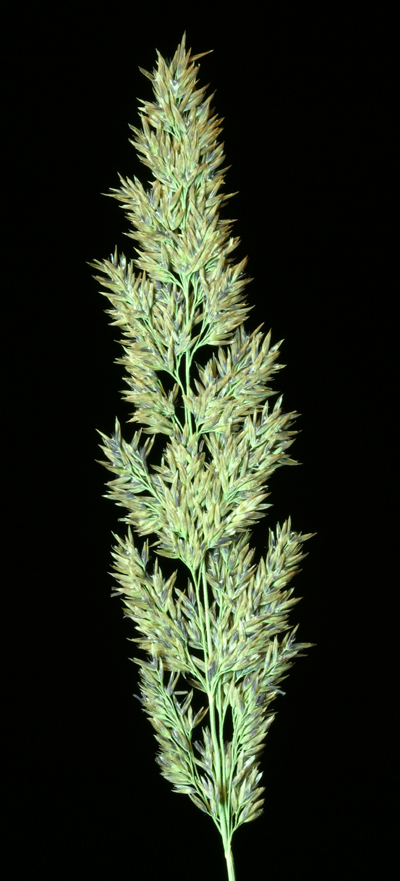
Calamagrostis canadensis is a species of grass known by the common names bluejoint and Canadian reedgrass. It is native to most of northern North America, including most all of Canada and all of the continental United States except for the South. It can be found in many types of habitat, including forest, taiga, and tundra in subarctic regions. It is the most common and widespread Calamagrostis species on the continent. It is a perennial grass with a branching stem reaching heights between 60 centimeters and 1.5 meters. The flat, drooping leaves are rough with tiny hairs. The flower cluster is up to 25 centimeters long and may be open and loose or narrow and densely packed with spikelets. Each spikelet is about half a centimeter long and purplish in color. It is a palatable food plant for livestock and wild grazing animals. It is a tough rhizomatous grass that provides soil stability in wet areas and is one of the first plants to reestablish on sites of recent oil spills. It can be a nuisance on sites of forest revegetation because it can outcompete conifer seedlings.
Grass
2 - 5 ft Tall
Upright
Moderate

Green
Spring
Full Sun, Partial Shade
Standing
Prefers loamy or clay soils. Grows poorly in sandy soils.
For propagating by seed: No treatment; 5 days stratification may improve germination.
Bogs, moist meadows and open places
Lodgepole Forest, Red Fir Forest, Subalpine Forest, Wetland-Riparian
Butterflies and moths supported
0 confirmed and 2 likely
Arctic Skipper
Carterocephalus palaemon
Yuma Skipper
Ochlodes yuma