

Carried by 9 nurseries
View Availability at NurseryData provided by the participants of the Consortium of California Herbaria
View additional distribution information on the Jepson eflora
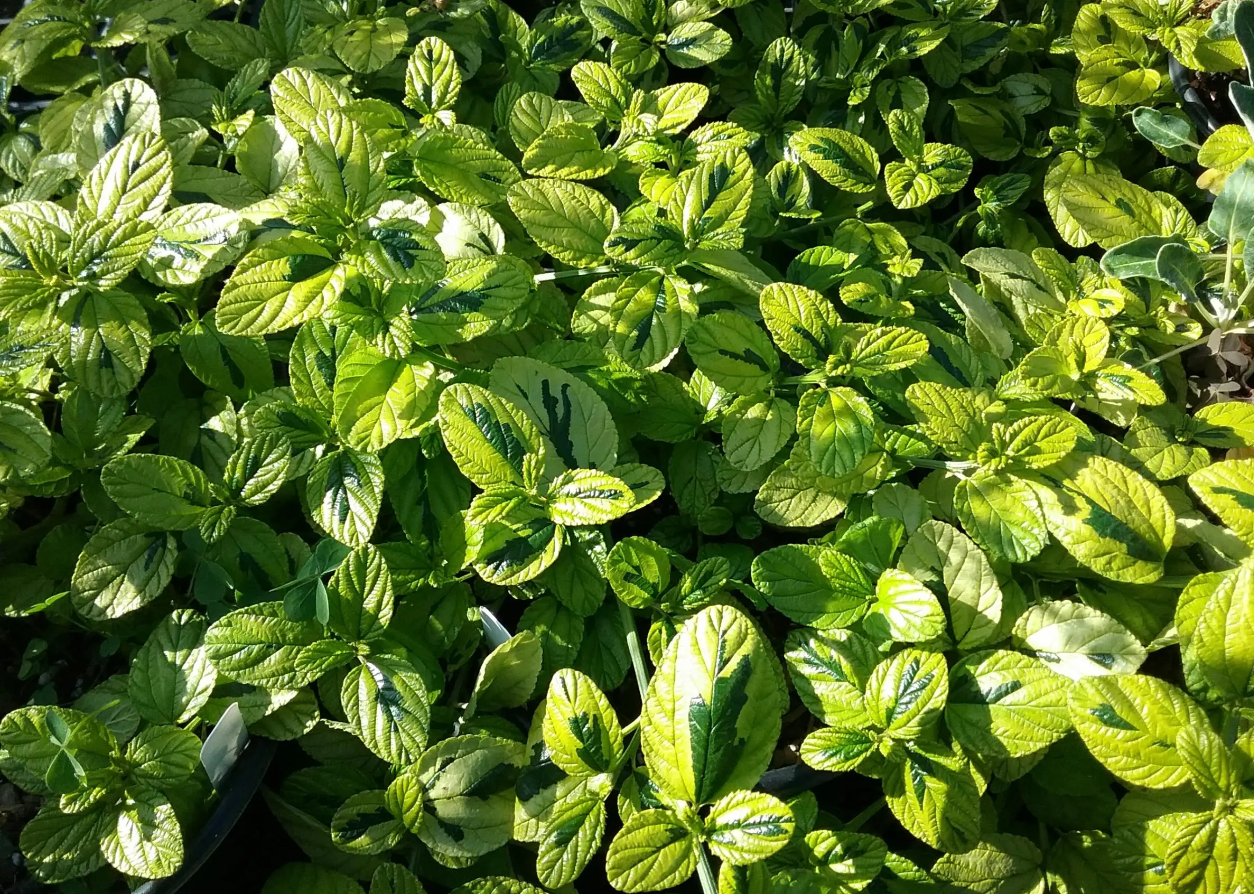
Horticultural selection from Ceanothus thyrsiflorus var. griseus. In the mainstream horticultural trade continues to use the older name for, which is Ceanothus griseus var. horizontalis This unusual low growing Ceanothus hybrid will definitely appeal to those who are attracted to variegated foliage. A bright low-growing shrub with chartreuse leaves splashed with dark green. Foliage is brightest in warm weather and full sun, and will be greener in winter or if heavily shaded. Remove any stems with solid green leaves that periodically develop.This ceanothus is fast growing to 1' tall and 4' to 6' wide, with light blue flowers appearing in spring. We recommend placing in full sun on the coast and shade or part shade inland. It is an excellent choice for containers, along a shady border or spilling over a wall. Diamond Heights Ceanothus is suitable for planting in the dry shade beneath native oaks and combines well with Blue-eyed grass and Coffeeberry. Frost hardy to 2 degrees F, and drought tolerant once established.
This was a sport selected by Barry Lehrman in 1985 from a planting of Carmel Creeper (Ceanothus griseus var. horizontalis), that was found in the Diamond Heights neighborhood on Mount Davidson, in the center of san Francisco Grows best in sandy, coarse-grained or other fast draining soil. Prefers sun in coastal sites, and part shade in inland sites. Selected by Barry Lehrman in 1985 from the Mount Davidson area of san Francisco and named for the housing development where it was found.
Shrub
6 - 12 in Tall
3 - 6 ft Wide
Prostrate
Moderate
Evergreen
Pleasant

Blue
Spring
Bank stabilization, Groundcover
Partial Shade
Low, Moderate
Easy
25
Fast
sandy, coarse-grained or other fast draining soils.
Soil PH: 5.0 - 7.0
Some cultivars may need annual pruning to maintain desired shape.
5*, 7*, 8*, 9*, 14, 15, 16, 17, 19, 20, 21, 22, 23, 24
Woollyleaf Ceanothus (Ceanothus tomentosus), Hoaryleaf Ceanothus (Ceanothus crassifolius), Toyon (Heteromeles arbutifolia), Coffeeberry (Frangula spp.), Oceanspray (Holodiscus discolor), Flannelbush (Fremontodendron spp.), Bush Poppy (Dendromecon rigida, spp. and Honeysuckle Lonicera spp.)
Thanks to Moosa Creek Nursery and the Theodore Payne Foundation for sharing information about this plant