

Carried by 8 nurseries
View Availability at NurseryData provided by the participants of the Consortium of California Herbaria
View additional distribution information on the Jepson eflora
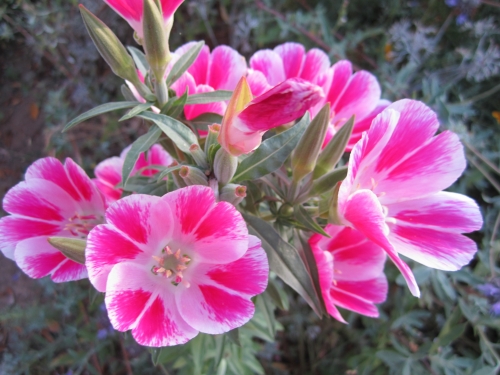
The whimsical name of this pretty, vibrantly-colored Clarkia comes from its late spring to early summer bloom time. It flowers in shades ranging from pink to purple. Farewell to Spring attracts bees and butterflies and is a favorite plant in native pollinator and cut-flower gardens.
A member of the Evening Primrose family, Farewell to Spring is a self-seeding annual that tolerates a wide range of soil conditions. It has low moisture needs and requires minimal watering once established.
Annual herb
2 - 3 ft Tall
Fast

Lavender, Pink, Purple, Red
Spring, Summer
Containers, Deer resistant
Full Sun
Low
Max 1x / month once established
Moderate
Fast, Medium, Slow
Tolerates both sandy and clay soils.
Tolerates saline soil.,Tolerates sodic soil..
Soil PH: 6.0 - 8.0
Seed germinates readily. Best if sowed in masses or drifts
Found in various settings in northern California including coastal prairie, northern coastal scrub, spring-moist areas, openings in evergreen forest or oak woodlands, and grasslands
Coastal Prairie, Mixed Evergreen Forest, Northern Coastal Scrub, Northern Oak Woodland, Forest
Mixes well with other annuals, especially blues such as Lupinus species, Baby Blue Eyes (Nemophila menziesii), Globe Gilia (Gilia capitata); yellows/oranges/golds such as Tidy Tips (Layia playgloss), Western Wallflower (Erysimum capitatum) and California Poppy (Eschscholzia californica). Also good with perennial herbs such as Western Columbine (Aquiligia formosa), Phacelia species, and bulbs/corms such as Calochortus species.
Butterflies and moths supported
0 confirmed and 5 likely
Mariposa Forester
Alypia mariposa
White-lined Sphinx
Hyles lineata
Clark's Day Sphinx Moth
Proserpinus clarkiae
Bornstein, C., Fross, D., & O'Brien, B. (2005). California Native Plants for the Garden.