

Carried by 0 nurseries
View Availability at NurseryData provided by the participants of the Consortium of California Herbaria
View additional distribution information on the Jepson eflora
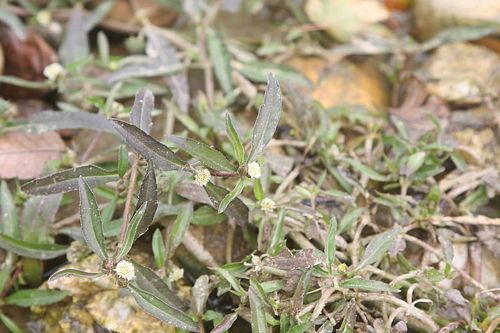
False daisy (Eclipta prostrata) is a plant in the Sunflower family with a long history in traditional medicine. The common name false daisy comes from the plant's tiny, daisy-like flowers. Other common names include yerba de tago and bhringraj. It grows in moist areas in California and many other places throughout the world. False daisy is sometimes classified as a weed.
False daisy has many chemical compounds (including flavonoids and steroids) that make it an important medicinal plant. It has been used to treat a wide range of health conditions, including a variety of skin, liver, and stomach ailments. It has also been used as a treatment for hair loss and snakebites.
This plant has a spreading growth habit and can quickly colonize disturbed areas. It tolerates many soil types, as long as it gets enough water. The small flowers appear in summer and can attract native pollinators. The center of the flower turns into a seed head after blooming. The leaves are lance-shaped and covered in hairs.
Annual herb
3 ft Tall
Upright
Moderate

White
Summer
Full Sun
Adaptable, tolerant of sand, loam and clay.
Moist places
Freshwater Marsh, Wetland-Riparian
Timalsina, D., & Devkota, H. P. (2021). Eclipta prostrata (L.) L. (Asteraceae): Ethnomedicinal Uses, Chemical Constituents, and Biological Activities. Biomolecules, 11(11), 1738. https://doi.org/10.3390/biom11111738, Southwest Desert Flora. Eclipta prostrata, False Daisy. https://southwestdesertflora.com/WebsiteFolders/All_Species/Asteraceae/Eclipta%20prostrata,%20False%20Daisy.html, Minnesota Wildflowers. Eclipta prostrata (Yerba-de-tajo).