

Carried by 19 nurseries
View Availability at NurseryData provided by the participants of the Consortium of California Herbaria
View additional distribution information on the Jepson eflora
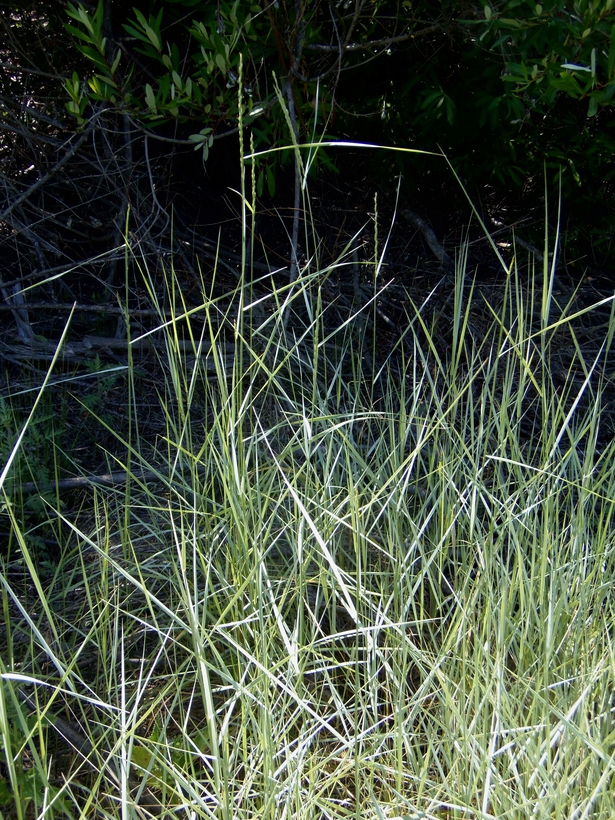
Blue wildrye (Elymus glaucus) is a perennial bunchgrass that grows upright to about 4 feet. It grows as narrow tufts of several erect stems and spreads outward by rhizomes. It is a common and widespread species native to North America from Alaska to New York to northern Mexico.
Blue wildrye is a crucial soil stabilizer, habitat creator, and food source for local wildlife. The seeds are a food source for native mammals and birds.
This is a popular accent grass for the garden, providing green to blue green color and texture contrast. It can hybridize with other species of Elymus to produce highly variable forms.
Grass
1 - 5 ft Tall
1 ft Wide
Upright
Fast
Summer Semi-deciduous

Yellow
Summer
Deer resistant
Full Sun, Partial Shade
Low
Max 2x / month once established
Easy
Tolerates cold to -15° F
Medium
Tolerates a wide variety of soils.
Tolerates serpentine soil.,Tolerates sodic soil..
Soil PH: 5.0 - 8.2
For propagating by seed: No treatment.
1, 2*, 3*, 4*, 5*, 6*, 7*, 8, 9, 10*, 11, 14*, 15*, 16*, 17*, 18*, 19*, 20*, 21*, 22*, 23*, 24*
Prairies, grasslands, meadows, other open places
Chaparral, Foothill Woodland, Lodgepole Forest, Red Fir Forest, Subalpine Forest, Valley Grassland, Yellow Pine Forest
Common native grass associates in the far west coastal prairies are Danthonia californica, Deschampsia caespitosa, Festuca idahoensis and Nassella pulchra. Can be combined with virtually any woodland or chaparral plants. Seaside daisy around its base creates a stunning display.
Butterflies and moths supported
1 confirmed and 9 likely
Glassy Borer
Apamea devastator
Nevada Skipper
Hesperia nevada
https://backyardhabitats.org/2023/08/native-plant-highlight-blue-wildrye/