

Carried by 14 nurseries
View Availability at NurseryData provided by the participants of the Consortium of California Herbaria
View additional distribution information on the Jepson eflora
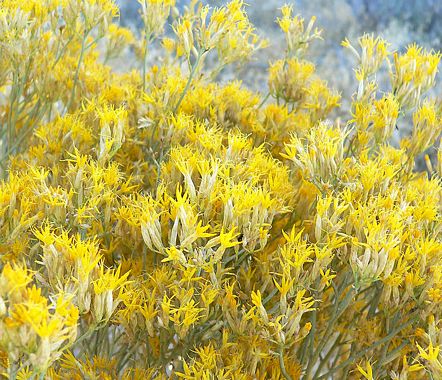
Rubber rabbitbrush (Ericameria nauseosa) provides year-round visual interest in waterwise and pollinator gardens. This medium-sized shrub is a member of the Sunflower family and thrives in dry regions of the Western US. "Rubber" refers to the plant's sap and "nauseosa" is a nod to its pungent scent. The plant is also sometimes called chamisa.
Rubber rabbitbrush blooms from summer into fall. The tubular flowers are golden-yellow in color. They are attractive to butterflies, bees, and other late season pollinators. Even when not in bloom, the blue-green, needlelike leaves and pale stems add color to the landscape.
Rubber rabbitbrush is a low moisture plant that likes full sun and sandy, well-draining soil. It's a low maintenance shrub that can be used in soil stabilization and restoration applications. It normally grows to about 5 ft in height although some plants can reach 9 ft tall. Winter pruning shapes rubber rabbitbrush and encourages next year's blooms.
Shrub
3 - 9 ft Tall
3 - 9 ft Wide
Mounding
Moderate
Winter Deciduous
Unpleasant

Yellow
Summer, Fall
Hedge
Full Sun
Very Low, Low
Never irrigate once established
Easy
Tolerates cold to -15° F
Fast
Prefers sandy or decomposed granite soil.
Tolerates sodic soil..
Soil PH: 5.0 - 8.0
For propagating by seed: No treatment; 1-3 mos. stratification may hasten germination.
Occurs in a wide variety of settings and habitats, usually somewhat arid, including desert, foothills, inland valleys, woodlands, sagebrush scrub
Alkali Sink, Chaparral, Foothill Woodland, Joshua Tree Woodland, Northern Juniper Woodland, Pinyon-Juniper Woodland, Red Fir Forest, Sagebrush Scrub, Yellow Pine Forest
Can be used with a wide variety of plants from around the state including native grasses, Sagebrush (Artemisia spp.), Creosote bush (Larrea tridentata), Joshua Tree (Yucca brevifolia), Buckbrush (Ceanothus cuneatus or greggii), Oaks (Quercus spp.), and many others
Butterflies and moths supported
3 confirmed and 23 likely
Rabbitbrush Webbing Moth
Synnoma lynosyrana
Ipsilon Dart
Agrotis ipsilon
Calscape, Miller, G.O. (2008). Landscaping with Native Plants of Southern California. Voyageur Press, US Forest Service. Rubber Rabbitbrush. Rubber Rabbitbrush. Www.fs.usda.gov, www.fs.usda.gov/wildflowers/plant-of-the-week/ericameria_nauseosa.shtml.