

Carried by 32 nurseries
View Availability at NurseryData provided by the participants of the Consortium of California Herbaria
View additional distribution information on the Jepson eflora
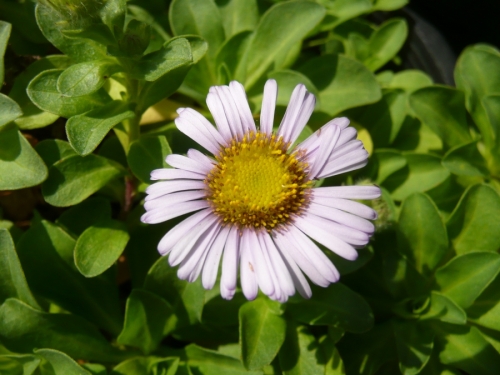
Horticultural selection from Erigeron glaucus. Cape sebastian seaside Daisy is the smallest of the seaside daisies which makes it an ideal plant for small gardens, containers, borders and butterfly gardens. In spring, summer and into fall this compact flower will have plentiful daisy type blooms, 1" diameter, lavender petals with yellow centers. Some supplemental irrigation in summer will keep this plant looking it's best. Feel free to dead head the flowers and cut back the flower stems to about 1" in winter after flowering. This plant will tolerate sand and also does well in clay soils. We have found Cape sebastian to take cold temperatures down to about 12F and tolerate summer heat. On the coast plant in sun or light shade, inland you will need to provide at least afternoon shade. The pollinators and butterflies adore this plant, and if seeds are allowed to form after flowering the song birds will also feast! Tolerates almost any soil type. Prefers sun in coastal sites, and part shade in inland sites. Selected for the garden.
Perennial herb
6 - 12 in Tall
2 - 3 ft Wide
Mounding
Fast
Evergreen

Lavender, Yellow
Spring, Summer
Groundcover, Deer resistant
Full Sun, Partial Shade
Low, Moderate
Easy
15
Fast, Medium, Slow
Tolerates a wide variety of soils.
Soil PH: 5 - 7
5, 9*, 14, 15, 16, 17*, 18*, 19*, 20*, 21*, 22*, 23*, 24*
Coast Dudleya (Dudleya caespitosa), Bright Green Dudleya (Dudleya virens ssp. virens), Lanceleaf Dudleya, California Sea Pink (Armeria maritima ssp. californica)
Thanks to Moosa Creek Nursery and the Theodore Payne Foundation for sharing information about this plant