

Carried by 10 nurseries
View Availability at NurseryData provided by the participants of the Consortium of California Herbaria
View additional distribution information on the Jepson eflora
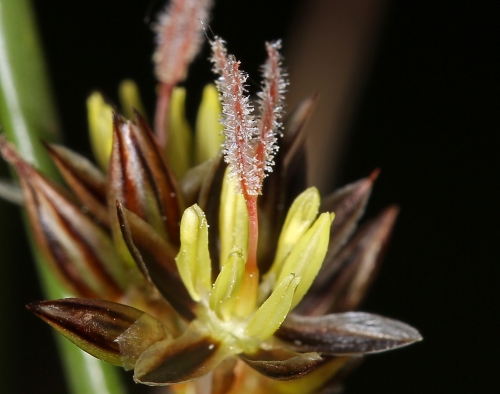
Juncus balticus is a species of rush known by the common name Baltic rush. It is native to a large part of North and South America. In California it is very widespread and occurs in every county. It is a plant of wetlands and other mesic places, though sometimes found in non-wetland areas. It prefers freshwater but can handle some salinity. It spreads by a rhizome and will occupy any suitably moist area. It will hybridize with many other Juncus species. There is one recognized subspecies at this time, ssp. ater, which also occurs over a large part of the state.
Grass
3 ft Tall
Fountain
Fast
Evergreen
None

Brown
Partial Shade
Moderate, High
Keep moist
Moderate
Tolerates cold to -15° F
Fast, Medium, Slow, Standing
Tolerant of a variety of soils.
Tolerates saline soil..
Soil PH: 5.0 - 8.0
By seed or rhizome cutting
1, 2, 3, 4*, 5*, 6*, 7*, 8, 9, 10, 11, 12, 13, 14*, 15*, 16*, 17*, 18*, 19*, 20*, 21*, 22*, 23*, 24*
Freshwater or brackish marsh in a wide variety of settings
Alpine Fell-Fields, Chaparral, Foothill Woodland, Lodgepole Forest, Red Fir Forest, Subalpine Forest, Valley Grassland, Yellow Pine Forest, Wetland-Riparian
Use in a bioswale or bog-type garden with other wetland plants such as Yerba Mansa (Anemopsis californica), Sedges (Carex spp.), Monkeyflower (Mimulus cardinalis or guttatus), Willows (Salix spp.), and Hedgenettle (Stachys spp.)
Butterflies and moths supported
0 confirmed and 7 likely
Mottled Marble
Bactra furfurana
Javelin Moth
Bactra verutana
Yellow Sedge Borer
Capsula subflava
Yellow-Collared Scape Moth
Cisseps fulvicollis