

Carried by 1 nurseries
View Availability at NurseryData provided by the participants of the Consortium of California Herbaria
View additional distribution information on the Jepson eflora
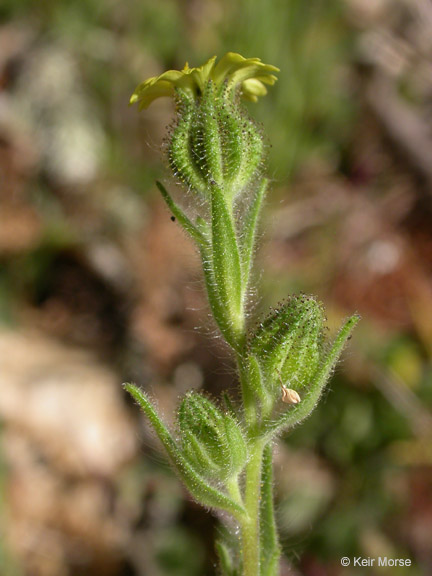
Madia gracilis is a species of flowering plant in the aster family known by the common names grassy tarweed, slender tarweed, and gumweed madia. The annual herb is native to western North America: from British Columbia, through California to Baja California; and east to Utah and Montana. It grows in many habitat types except for arid desert areas, including oak woodlands and mixed evergreen forests. Madia gracilis is variable in appearance. In general, it is an aromatic annual herb growing up to 1 metre (3. 3 ft) in height. Its stem is branching, and hairy and glandular in texture. The leaves are up to 10 centimeters long and covered in soft hairs and stalked resin glands. The inflorescence is an array of clusters of flower heads. Each head is lined with phyllaries that are coated densely with stalked knobby resin glands. It bears yellow, lobe-tipped ray florets a few millimeters long and several black-anthered disc florets. The fruit is a flat, hairless achene with no pappus. Uses. The seeds were used to make pinole by the indigenous Mendocino, Miwok, and Pomo peoples of California.
Annual herb
3 ft Tall
Evergreen

Yellow
Foothill Woodland, Mixed Evergreen Forest, Northern Oak Woodland
Butterflies and moths supported
0 confirmed and 3 likely
Spotted Straw Sun Moth
Heliothis phloxiphaga
Small Heliothodes Moth
Heliothodes diminutivus