

Carried by 19 nurseries
View Availability at NurseryData provided by the participants of the Consortium of California Herbaria
View additional distribution information on the Jepson eflora
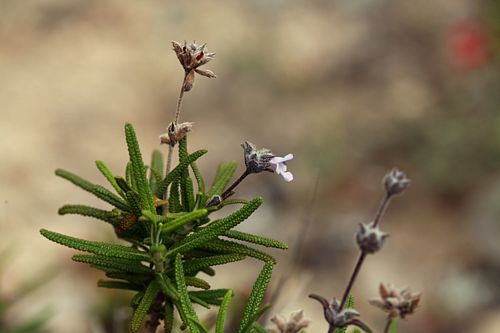
Salvia brandegeei is a herbaceous perennial evergreen shrub in the Lamiaceae (Mint) family that grows to 3-4 feet in its native habitat. For many years, it was thought to be native only to Santa Rosa Island, one of the Channel Islands of California. In the 1960s and 1970s six colonies were found in Baja California. It is named after Kate Brandegee, a pioneering field botanist in California and Baja. In cultivation, the plant will reach 4-5 feet tall and up to 7 feet wide. It has dark green scalloped leaves, about 3-4 inches long and 0.5 inch wide. The pale blue or lavender flowers are about 0.5 inch long, in tightly spaced whorls. The violet-gray calyx, combined with the wide open flower lips, make it a very showy flower. It is best used very near the coast (within about 10 miles) in the central or southern part of the state.
Shrub
3 - 5 ft Tall
4 ft Wide
Mounding
Fast
Evergreen
Pleasant

Blue, Purple, Lavender, White
Spring
Deer resistant
Full Sun
Very Low, Low
Max 2x / month once established
Easy
Tolerates cold to 0° F
Fast, Medium, Slow
Tolerates sandy or clay soil.
Soil PH: 6.0 - 8.0
Prune to shape in late summer or early fall
Seeds or cuttings
Relatively dry hillsides and canyons of Santa Rosa Island and northwest Baja
Chaparral, Closed-cone Pine Forest, Coastal Sage Scrub
In its native habitat it is found with a variety of chaparral and sage scrub species such as Manzanita (Arctostaphylos spp.), Ceanothus spp. (arboreus or megacarpus var. insularis), Island Tree Poppy (Dendromecon harfordii), Encelia californica, Golden Yarrow (Eriophyllum confertiflorum), Sagebrush (Artemisia californica), Island Bristleweed (Hazardia detonsa), Island Mallow (Lavatera assurgentiflora), Sticky Monkeyflower (Diplacus aurantiacus), Goldenbush (Isocoma menziesii), Holly-leaf Cherry (Prunus ilicifolia ssp. lyonii), and with larger trees such as Island Ironwood (Lyonothamnus floribundus), Oaks (Quercus spp.) and Pine species, esp. Torrey Pine (Pinus torreyana)
Butterflies and moths supported
0 confirmed and 5 likely
Climbing Cutworm
Abagrotis orbis
Alfalfa Looper Moth
Autographa californica
Bilobed Looper Moth
Megalographa biloba