

Carried by 5 nurseries
View Availability at NurseryData provided by the participants of the Consortium of California Herbaria
View additional distribution information on the Jepson eflora
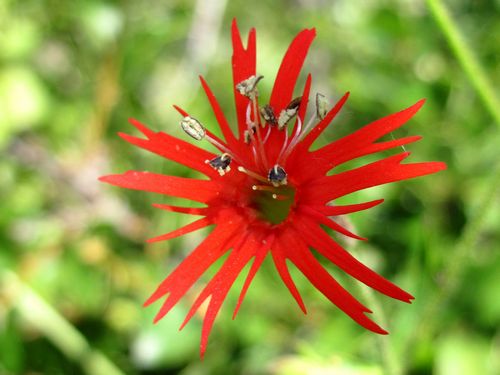
Silene laciniata is a herbaceous flowering plant in the same family as carnations (Caryophyllaceae) that is commonly called Indian-pink, Mexican campion, or Mexican-pink. Many subspecies have been described in the past, and some of these names may still be in use. Presently, there are two recognized subspecies in California. Ssp. laciniata is found in the southern coastal part of the state from San Luis Obispo County to San Diego County and throughout much of the Baja peninsula. Ssp. californica is more often found in the central and northern parts of the state in hilly or mountainous areas including the Transverse Range, the Coast Ranges and the foothills of the Sierras. For gardening purposes, check with your nursery for the proper plants for your area.
Silenes develop a deep taproot that helps them get through a dry summer. They may go summer dormant or may stay green depending on conditions of shade, heat and moisture. The plant is valued for its bright red starburst flowers which are small but eye-catching. Silene often grows vine-like through adjacent plants to display its flowers in unexpected locations. Plant it where the small flowers will be most visible. It deserves to be used more often. The common name Catch-fly refers to the sticky hairy glands on the stems and leaves which sometimes trap tiny insects. It is not clear whether this contributes any nutrients to the plant.
Locate this plant behind something else, and let it grow forward to surprise the viewer with its luminous red flowers.
Annual herb, Perennial herb
2 ft Tall
3 ft Wide
Moderate
Summer Semi-deciduous

Red
Spring, Summer
Deer resistant
Partial Shade
Low, Moderate
Max 2x / month once established
Moderate
Tolerates cold to 10° F
Fast, Medium
Prefers good drainage.
Soil PH: 5.4 - 7.5
Seeds, cuttings, root cuttings. For propagating by seed: No treatment.
Rocky to sandy areas from the coast to inland, most often in the understory of larger shrubs
Chaparral, Coastal Sage Scrub, Coastal Strand
Works well in a woodland or rock garden with other low growing plants in part shade, such as Meadow Rue (Thalicturm species), Yerba Buena (Clinopodium douglasii), Western Columbine (Aquilegia formosa), Monkeyflower (Mimulus cardinalis or guttatus). Can be planted under larger shrubs and allowed to grow up through them.
Butterflies and moths supported
0 confirmed and 2 likely
Hitched Arches
Melanchra adjuncta
Rufous Quaker Moth
Protorthodes rufula