

Carried by 22 nurseries
View Availability at NurseryData provided by the participants of the Consortium of California Herbaria
View additional distribution information on the Jepson eflora
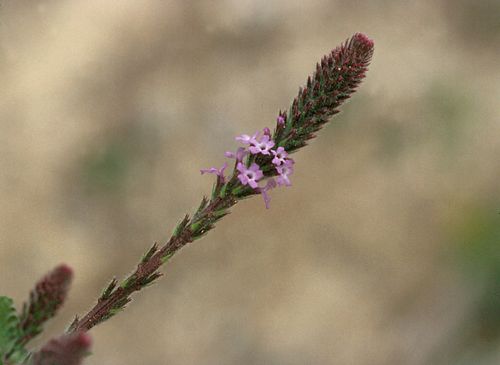
Vervain (Verbena lasiostachys) is a perennial herb in the Verbena family that grows in northern, central, and southern California, as well as Oregon. It is found primarily along the coast, in the Coast Ranges, foothills, and scattered inland locations. This aggressive spreader is a pioneer species that thrives in wet places, at elevations ranging from sea level to 8,200 feet.
Vervain has a long blooming season, with small pink to purple flowers densely clustered on spikes rising above its nettle-like leaves. It goes completely dormant in winter and grows quickly in early spring. Given its spreading nature, it should be used in areas where it can be controlled.
This plant is an excellent choice for butterfly gardens, attracting pollinators with its nectar-rich flowers. The flowers will also draw hummingbirds, making it a great addition to gardens looking to support a variety of wildlife.
Perennial herb
3 ft Tall
3 ft Wide
Winter Deciduous

Blue, Purple, Lavender
Summer, Spring, Fall
Full Sun
Low
Max 1x / week once established
Moderate
Tolerates cold to -20° F
Fast, Medium, Slow, Standing
Tolerates a variety of soils including sand and clay as long as adequate moisture is present.
Soil PH: 6.0 - 8.0
Prune runners at any time to control spread
Wet places, ditches, marshes
Chaparral, Foothill Woodland, Lodgepole Forest, Red Fir Forest, Subalpine Forest, Valley Grassland, Yellow Pine Forest, Wetland-Riparian
Use with plants that prefer damp areas, such as Columbine (Aquilegia formosa or exima), Virgin's Bower (Clematis ligusticifolia), Dogwood (Cornus spp.), Sticky Cinquefoil (Drymocallis glandulosa), Stream Orchid (Epipactis gigantea), Gum Plant (Grindelia spp.), Ocean Spray (Holodiscus discolor), Iris species, Leopard Lily (Lilium pardalinum), Scarlet Monkeyflower (Erythranthe cardinalis), Seep Monkeyflower (Erythranthe guttata), Evening Primrose (Oenothera elata), California Buttercup (Ranunculus californicus), Bee Plant (Scrophularia californica), Triteleia species, and Viola species.
Butterflies and moths supported
3 confirmed and 6 likely
Fine-Lined Sallow
Catabena lineolata
Common Buckeye
Junonia coenia
Gray Buckeye
Junonia grisea
Oblique-Banded Leafroller Moth
Choristoneura rosaceana