

Carried by 18 nurseries
View Availability at NurseryData provided by the participants of the Consortium of California Herbaria
View additional distribution information on the Jepson eflora
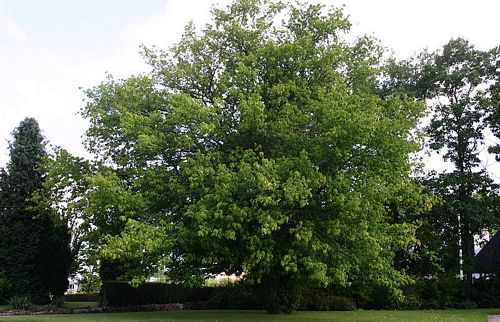
Box elder (Acer negundo), sometimes called boxelder, is a type of maple tree commonly found growing in moist areas near streams and rivers. Box elder is a deciduous tree with pinnate compound leaves (small leaflets that branch out of a single stem). The leaves turn yellow in the fall. Clusters of small flowers appear in spring. The flowers on female trees develop winged fruits called samaras. The flowers attract pollinators and the seeds provide food for birds and small mammals.
Box elder is an attractive tree that provides shade and visual interest in the landscape. Some gardeners prefer male box elders because they are less messy than female trees. Gardeners should also be aware that this tree sends out suckers which can become weedy and invasive. This fast-growing tree needs a large planting area as it can reach over 50 ft tall - and nearly as wide - when mature. It also requires a moderate to high level of moisture, including weekly supplemental irrigation in summer.
Box elder gets its name from its wood, which is used to make boxes and crates. The wood pulp is used in paper making. Like other maples, the tree's sweet sap can be cooked into a syrup.
Tree
35 - 66 ft Tall
40 ft Wide
Upright
Fast
Winter Deciduous

White, Cream
Spring, Winter
Deer resistant
Partial Shade, Full Sun
Moderate
Max 1x / week once established
Moderate
Tolerates cold to -15° F
Medium, Slow
Tolerates a variety of soils as long as adequate moisture is present.
Soil PH: 5.0 - 8.0
For propagating by seed: Scarification and 2-3 mos. stratification; use fresh seeds.
1, 2, 3, 4*, 5*, 6*, 7*, 8*, 9*, 14*, 15*, 16*, 17*, 18*, 19*, 20*, 21*, 22*, 23*, 24*
River/stream edges and wet places in coastal mountains and the central valley, usually as part of a woodland or forest complex
Chaparral, Foothill Woodland, Valley Grassland, Yellow Pine Forest, Wetland-Riparian
Use with other riparian trees such as Maples (other Acer spp.), Alders (Alnus spp.), Dogwoods (Cornus spp.), Ash (Fraxinus latifolia or velutina), Northern Black Walnut (Juglans hindsii), Cottonwood (Populus spp.), Sycamore (Platanus racemosa), Willows (Salix spp.), Black Elderberry (Sambucus nigra), and Bay Laurel (Umbellularia californica)
Butterflies and moths supported
24 confirmed and 63 likely
Climbing Cutworm
Abagrotis orbis
Fall Cankerworm Moth
Alsophila pometaria
Pale-headed Aspen Leafroller Moth
Anacampsis niveopulvella
Common Gray
Anavitrinella pampinaria
Calscape, Schmidt, M.G, Greenberg, K.L. (2012). Growing California Native Plants (2nd ed.). University of California Press, Missouri Botanical Garden. Acer negundo. Acer Negundo - Plant Finder. Www.missouribotanicalgarden.org, www.missouribotanicalgarden.org/PlantFinder/PlantFinderDetails.aspx?kempercode=a841. Acer Negundo (Ash-Leaf Maple, Boxelder), North Carolina Extension Gardener Plant Toolbox. Plants.ces.ncsu.edu, plants.ces.ncsu.edu/plants/acer-negundo/.