

Carried by 42 nurseries
View Availability at NurseryData provided by the participants of the Consortium of California Herbaria
View additional distribution information on the Jepson eflora
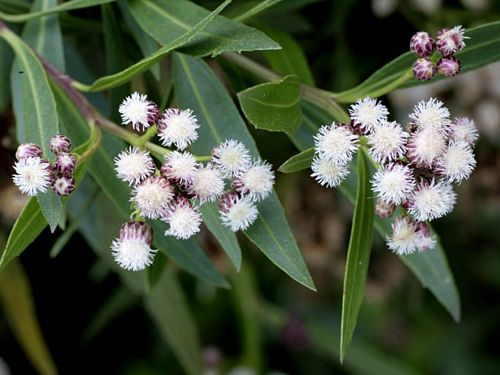
Mulefat is a robust and adaptable flowering shrub known for its sticky foliage and abundant fuzzy flowers, which range in color from white to pink or red-tinged and bloom throughout the year. Its long, pointed leaves and fast-growing, upright, spreading form make it a striking addition to natural gardens. Typically reaching about 6 feet tall and 3 feet wide, Mulefat can grow as large as 12 feet tall and 9 feet wide in optimal conditions.
This resilient plant thrives in full or partial sun and tolerates a variety of soil types. While highly drought-tolerant once established, it looks its best with regular summer watering. It’s ideal for planting in naturally moist areas, such as near streams or wetlands. Without sufficient water, Mulefat can become weedy and less visually appealing. If it becomes overgrown, it can be rejuvenated by cutting it back to 3-4 inches above the base, encouraging fresh, green growth.
Mulefat is highly valued for erosion control and wildlife support. Its flowers are a magnet for butterflies, bees, and other beneficial insects, while also attracting birds, making it a versatile choice for habitat restoration and ecological gardening.
Shrub
6 - 12 ft Tall
3 - 9 ft Wide
Upright, Rounded, Upright Columnar
Fast
Evergreen, Summer Semi-deciduous
Slight

Yellow, Pink, White
Summer, Spring, Fall, Winter
Hedge
Full Sun
Low, Moderate, High
Max 1x / week once established
Easy
Tolerates cold to -10 - 0° F
Fast, Medium, Slow, Standing
Heavier riparian soils, sandy washes.
Soil PH: 6 - 9
This plant can be pruned as desired. If can be cut down to just a few inches above the ground if it's looking dead and weedy, and will grow back nicely.
sandy washes, streambanks, valley grasslands
Coastal Sage Scrub, Foothill Woodland, Valley Grassland, Wetland-Riparian
Red WIllow, Black Willow, Sandbar Willow (Salix exigua var. hindsiana)
Butterflies and moths supported
2 confirmed and 27 likely
Fatal Metalmark
Calephelis nemesis
Mousy Plume Moth
Lioptilodes albistriolatus
Common Gray
Anavitrinella pampinaria
Orange Tortrix Moth
Argyrotaenia franciscana