

Carried by 0 nurseries
View Availability at NurseryData provided by the participants of the Consortium of California Herbaria
View additional distribution information on the Jepson eflora
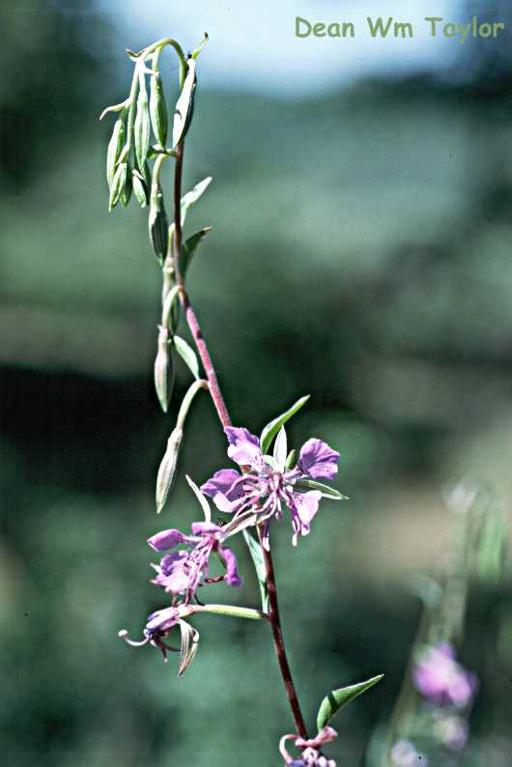
Clarkia borealis is a rare species of flowering plant in the evening primrose family known by the common name northern clarkia. It is endemic to California, where it is known from the forests of the southern Klamath Range and the southernmost Cascade Range foothills. It is an annual herb growing an erect, slender stem. The leaves are oval in shape and borne on short petioles. The top of the stem is occupied by the inflorescence, in which the lowest flowers open first and hanging, pointed flower buds occur at nodes at the top. The sepals separate as the flower blooms, revealing purplish pink petals. Each petal is between 1 and two centimeters long, elongated triangular to semicircular in shape, and sometimes flecked with dark purple. There are 8 stamens with anthers bearing blue-gray pollen, and a protruding stigma. Both subspecies of this plant are rare. ssp. biloba is known from only about 20 occurrences in Shasta and Trinity Counties, and the even less common ssp. arida, the Shasta clarkia, is known only from the forests around Shingletown.
Annual herb
3 ft Tall

Pink, Purple
Butterflies and moths supported
0 confirmed and 3 likely
White-lined Sphinx
Hyles lineata
Clark's Day Sphinx Moth
Proserpinus clarkiae
Pacific Green Sphinx Moth
Proserpinus lucidus