

Carried by 51 nurseries
View Availability at NurseryData provided by the participants of the Consortium of California Herbaria
View additional distribution information on the Jepson eflora
Cascading mounds of pale pink and white flowers make sea cliff buckwheat (Erigonum parvifolium) an attractive feature of a native hillside or pollinator garden. Found on coastal cliffs in Southern and Central California, sea cliff buckwheat is also a useful selection for the home garden. It is sometimes called dune or coast buckwheat.
Sea cliff buckwheat grows in mounds up to 3 ft in width and height. This plant provides good coverage and erosion control for sloped landscapes. Alone or planted in clusters, it's also at home in rock gardens, containers, borders, and as a lawn replacement.
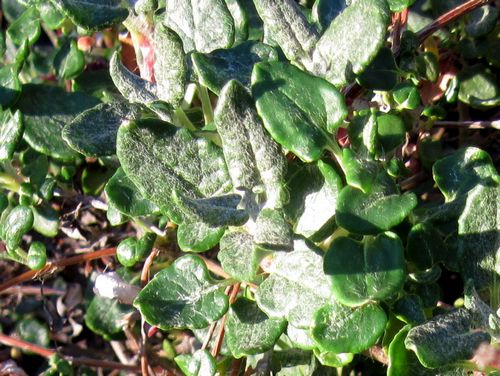
The small evergreen leaves are dark green, accented with a reddish tint. During the long flowering season, the blooms change from a delicate pinkish-white to a rusty brown. The blooms are an important food source for many native butterflies and moths, including endangered species such as the El Segundo Blue butterfly.
Sea cliff buckwheat grows in full sun at the coast, but can benefit from some shade in hot inland areas. Water needs are low. Once a month watering is sufficient after the plant is established. Prune back in early spring, before flower buds appear. Deadheading is not recommended because the spent flowers provide seeds for birds and extra shade for the plants in hot weather.
Shrub
1 - 3 ft Tall
2 - 3 ft Wide
Mounding, Spreading
Moderate
Evergreen
Slight

Red, Yellow, Green, Pink, White
Summer, Spring, Fall, Winter
Bank stabilization, Groundcover
Full Sun, Partial Shade
Very Low, Low, Moderate
Max 1x / month once established
Easy
Tolerates cold to 0 - 10° F
Fast, Medium
Sandy rocky soils, sandstone.
Soil PH: 5 - 8
For propagating by seed: No treatment.
5, 14, 15*, 16*, 17*, 21, 22, 23, 24*
Dunes and bluffs
Coastal Sage Scrub, Coastal Strand
Giant Coreopsis (Leptosyne gigantea), Chalk Dudleya (Dudleya pulverulenta), White Sage (Salvia apiana), Coastal Agave (Agave shawii), White Coast Ceanothus (Ceanothus verrucosus), California Buckwheat (Eriogonum fasciculatum var. fasciculatum), Seaside Fleabane,Coast Eriogonum
Butterflies and moths supported
9 confirmed and 37 likely
Square-spotted Blue
Euphilotes battoides
El Segundo Blue
Euphilotes battoides allyni
Bernardino Blue
Euphilotes bernardino
Theodore Payne Foundation. Eriogonum parvifolium - Sea Cliff Buckwheat. https://store.theodorepayne.org/products/theodore-payne-foundation-eriogonum-parvifolium; Waterwise Garden Planner for Southern California. Cliff buckwheat: Eriogonum parvifolium. https://waterwisegardenplanner.org/plants/eriogonum-parvifolium/