

Carried by 16 nurseries
View Availability at NurseryData provided by the participants of the Consortium of California Herbaria
View additional distribution information on the Jepson eflora
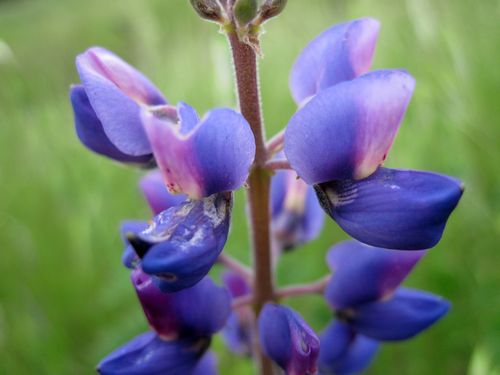
Succulent lupine (Lupinus succulentus) is an annual with dark green six-fingered leaves and spikes of purple-blue flowers that bloom in winter to spring. Sometimes flowers are shades of light purple, pink, and white. It grows fast to reach 2 to 4 feet tall and 3 feet wide. The fruit is a hairy legume pod. Caution: seeds, leaves and stems are toxic.
This plant is popular in gardens because it is the most water-tolerant of all lupines. It prefers full sun and moist clay or heavy soils. The amount of fertility and moisture generally dictates the height of the plant. The seed germinates easily in any season given enough water. Seeds can be treated before planting by pouring hot water over them in a cup and allowing them to soak. They should be planted about a quarter inch deep. The plants compete with weeds and add nitrogen to the soil. Sow in a mass for best effect.
Annual herb
2 - 4 ft Tall
3 ft Wide
Upright Columnar
Fast
Slight

Blue, Lavender, White
Spring, Winter
Full Sun, Partial Shade
Moderate
Max 2x / month once established
Moderate
Tolerates cold to 25° F
Medium, Slow
Tolerates a variety of soils but performs best in heavy, moist soil.
Soil PH: 6.0 - 8.0
By seed. After flowering, seeds may be left to fall on the ground or collected to be sown the following season. For propagating by seed: Hot water, scarification, or soak in concentrated H2S04 for 6 to 8 hours; scarification or soaking may improve germination. Optimum Soil Temperature for Germination is 55F to 70F. Germination time is 15 to 75 days. Sowing Depth: 1/8".
7*, 8*, 9*, 10, 11, 12, 14*, 15*, 16*, 17*, 18*, 19*, 20*, 21*, 22*, 23*, 24*
Meadows, grasslands, openings in chaparral or any areas with heavy, moist soil.
Chaparral, Foothill Woodland, Valley Grassland, Yellow Pine Forest
Works with a wide variety of other plants as long as soil and moisture are compatible, such as Coast Live Oak (Quercus agrifolia), Bay Laurel (Umbellularia californica), Madrone (Arbutus menziesii), California Peony (Paeonia californica), Yerba Buena (Clinopodium douglasii), Ocean Spray (Holodiscus discolor), Snowberry (Symphoricarpos mollis), Miners Lettuce (Claytonia perfiolata), and Canyon Sunflower (Venegasia carpesioides).
Butterflies and moths supported
1 confirmed and 50 likely