

Carried by 9 nurseries
View Availability at NurseryData provided by the participants of the Consortium of California Herbaria
View additional distribution information on the Jepson eflora
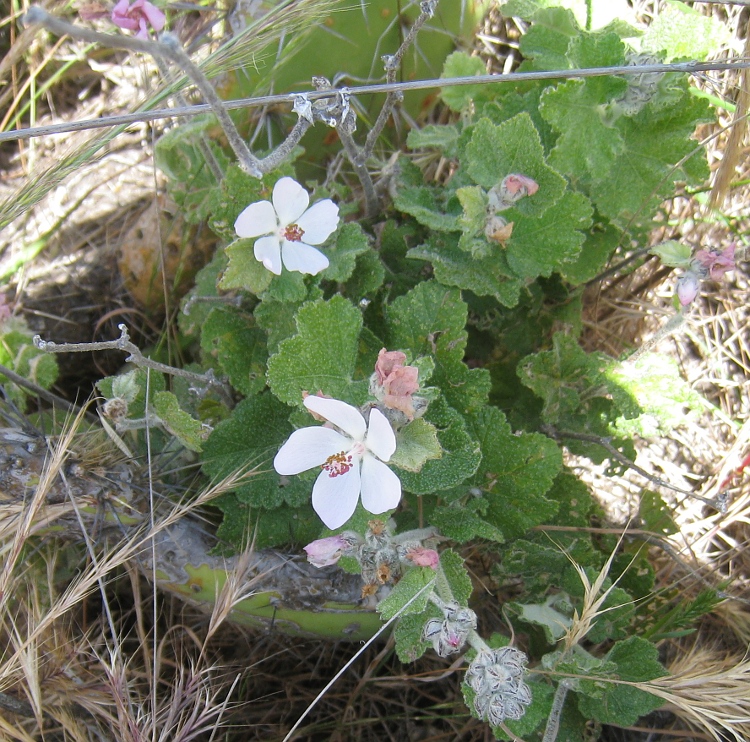
Malacothamnus clementinus is a rare species of flowering plant in the mallow family known by the common name San Clemente Island bushmallow. It is endemic to San Clemente Island, one of the Channel Islands of California, where it is known from fewer than ten occurrences in the steep, rocky seaside canyons. The plant became a federally listed endangered species in 1977 when it was limited to a single population nearing extinction due to herbivory by the feral goats which once infested the small island. The goats have since been removed and the plant is recovering well, but many threats still remain, including competition with introduced species of plants, wildfire, erosion, and damage to the landscape by United States Navy bombing exercises. This is a bushy shrub with a thin, multibranched stem coated in long, fine hairs. It reaches heights between 40 centimeters and one meter. It bears rounded dark green leaves several centimeters long which are divided into sharp lobes. The flower cluster is a spikelike cluster of a few pale pink, lavender, or nearly white flowers with somewhat lance-shaped, hairy petals several millimeters long. It rarely produces fertile seed and it is believed to propagate itself mainly via rhizomes.
Shrub
1 - 3 ft Tall

Pink, White, Lavender
Spring, Summer
Full Sun
Low, Very Low
Fast
Rocky canyon walls
Butterflies and moths supported
0 confirmed and 3 likely
Northern White-Skipper
Heliopetes ericetorum
West Coast Lady
Vanessa annabella