

Carried by 0 nurseries
View Availability at NurseryData provided by the participants of the Consortium of California Herbaria
View additional distribution information on the Jepson eflora
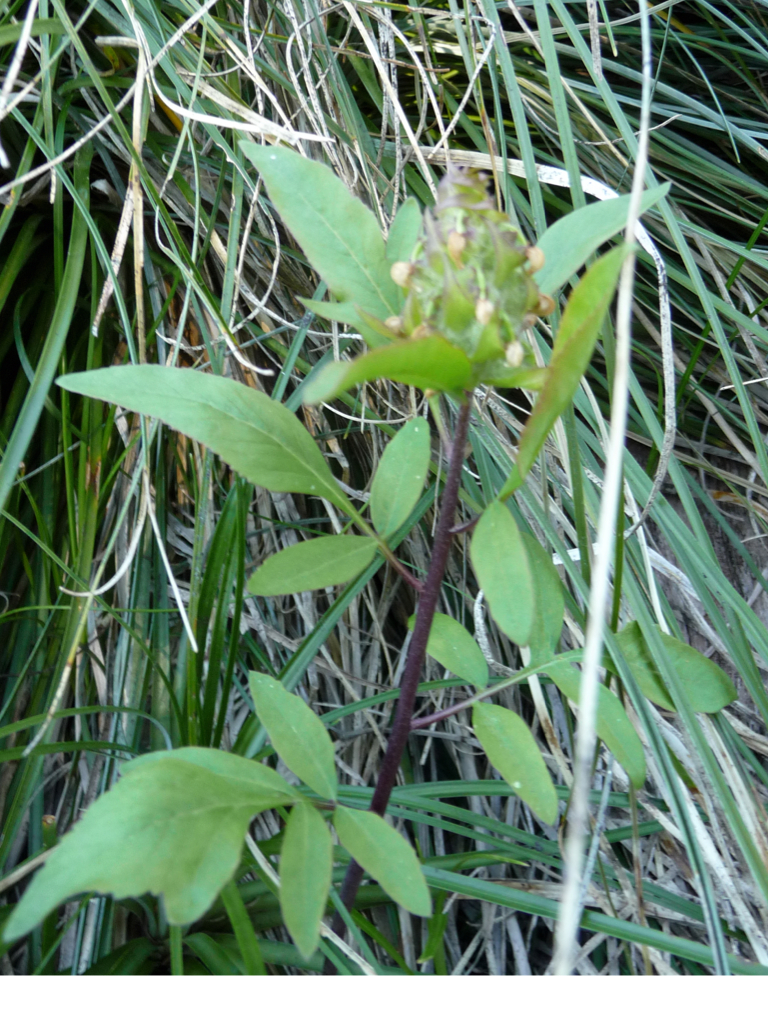
Pedicularis howellii is an uncommon species of flowering plant in the broomrape family known by the common name Howell's lousewort. It is endemic to the Siskiyou Mountains of the Klamath Range in southern Oregon and northern California, where it grows on the edges of coniferous forests. This is a perennial herb producing one or more stems up to 45 centimeters tall from a long caudex. The leaves are up to 20 centimeters long, lance-shaped, and divided into many toothed oval lobes; those higher on the stem may be unlobed. The basal leaves fall away early. The inflorescence is a small raceme of flowers occupying the top of the stem. Each white to light purple flower is up to a centimeter long and is sickle-shaped, with a curved beak-like upper lip and a three-lobed lower lip which may be tucked into the hairy mass of sepals. The plant is pollinated by bumblebees including Bombus mixtus. Between the flowers are hairy to woolly triangular bracts. The fruit is a capsule just under a centimeter long containing seeds with netted surfaces. The plant probably relies on an adequate amount of snow in the area to keep enough moisture in the soil for germination the following season.
Perennial herb
2 ft Tall

White, Purple
Butterflies and moths supported
0 confirmed and 3 likely
Anicia Checkerspot
Euphydryas anicia
Variable Checkerspot
Euphydryas chalcedona
Edith's Checkerspot
Euphydryas editha