

Carried by 47 nurseries
View Availability at NurseryData provided by the participants of the Consortium of California Herbaria
View additional distribution information on the Jepson eflora
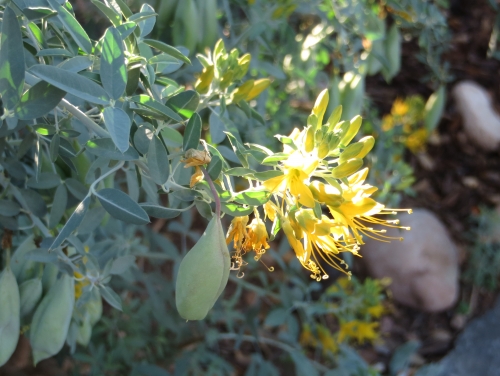
Bladderpod (Cleomella arborea) is a very fast-growing densely-branching shrub with abundant bright-yellow flower clusters at the ends of its stem branches. It can grow to 1 ½ - to 6 ½ -feet tall and 6 feet wide. The fruit is a large, papery, lantern-like capsule that is smooth and green when new, aging to light brown. This is the “bladderpod” for which the plant is named. A typical flower cluster bears a number of unopened flower buds at its tip, open flowers, and maturing fruits. The leaves are light green. The flowers stay on the plant most of the year and are highly fragrant, though opinion is divided on whether the scent is pleasant or unpleasant.
Bladderpod is one of the easiest California natives to grow. This tough plant does well even on south-facing slopes, alkaline soils, and salty conditions. It tolerates weekly summer water but can also get by with only natural rainfall. It is easy to grow from seeds and readily self seeds; once you have a few mature plants in your garden, expect new seedlings to pop up each winter.
It is deer resistant and attracts bees, butterflies and hummingbirds. It particularly attracts harlequin beetles which eat the leaves. If they become a problem, they can be removed by hand or sprayed off with a garden hose. It is usually not possible to eliminate them entirely.
Shrub
2 - 7 ft Tall
6 ft Wide
Mounding
Fast
Evergreen
Pleasant, Unpleasant

Yellow
Summer, Spring, Fall, Winter
Bank stabilization, Deer resistant
Full Sun
Very Low, Low
Max 1x / month once established
Easy
Fast
Prefers well-drained soils such as sand or decomposed granite.
Tolerates saline soil..
Soil PH: 7.0 - 9.0
By seed
8, 9, 12, 13, 14*, 15, 16, 17, 19*, 20*, 21*, 22*, 23*, 24*
This plant is unique in occurring in the immediate vicinity of the seashore, inland valleys and foothills, as well as in high desert and low desert. Near the coast, it is typically found on dry slopes in coastal sage scrub. In the high desert, it's found in Joshua Tree Woodland; in low desert, in Creosote Bush Scrub.
Coastal Sage Scrub, Creosote Bush Scrub, Joshua Tree Woodland
A huge range of potential companions including Sand Verbena (Abronia spp.), California Sea Lavender (Limonium californicum), California Sagebrush (Artemisia californica), Chamise (Adenostema fasciculatum), Brittlebush (Encelia spp.), Joshua Tree (Yucca brevifolia), Indian Mallow (Abutilon palmeri), Rush Milkweed (Asclepias subulata), Buckwheat (Eriogonum spp.), Ocotillo (Fouquieria splendens), Chuparosa (Justicia californica), Apricot Mallow (Sphaeralcea ambigua), Yucca species, numerous cactus species.
Butterflies and moths supported
0 confirmed and 4 likely