

Carried by 6 nurseries
View Availability at NurseryData provided by the participants of the Consortium of California Herbaria
View additional distribution information on the Jepson eflora
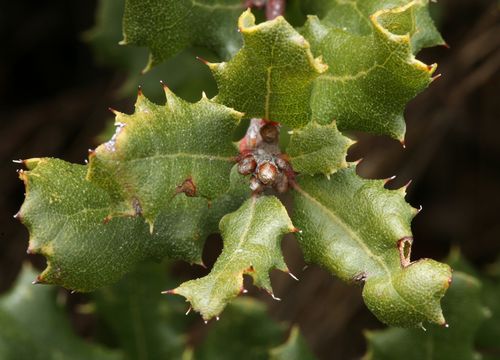
Leather oak (Quercus durata) is a small, drought-adapted oak species endemic to California. This shrub oak, in the Fagaceae (beech) family, typically grows in serpentine soils and is often found with manzanita in chaparral habitats. It thrives in mountainous regions but is well-suited for gardens as it doesn't require serpentine soil and can tolerate a variety of garden soils, including those with clay. Best adapted to dry, rocky, and nutrient-poor soils, leather oak can form low, dense thickets and is often used as an urban tree.
A keystone plant in its native ecosystem, leather oak supports a diverse range of wildlife species.
Tree, Shrub
3 - 12 ft Tall
3 - 12 ft Wide
Mounding
Slow
Evergreen
None

Green, Cream
Spring
Bank stabilization, Hedge
Full Sun
Very Low, Low
Max 2x / month once established
Moderate
Tolerates cold to -5° F
Medium
Although often found in serpentine soil, it is tolerant of other soils as long as nutrient level is low and drainage is adequate.
Tolerates serpentine soil..
Soil PH: 6.0 - 7.0
From acorns. For propagating by seed: Fresh seeds sow in fall outdoors or stratify to hold for spring sowing. (USDA Forest Service 1974).
Typically found as part of chaparral in rocky, foothill or mountainous areas
Chaparral, Foothill Woodland
Use with other plants of the mountainous chaparral and woodlands, such as Madrone (Arbutus menziesii), Coast Redwood (Sequoia sempervirens), Manzanita (Arctostaphylos spp.), Ceanothus spp., Toyon (Heteromeles arbutifolia), Laurel Sumac (Malosma laurina), various annuals and geophytes.
Butterflies and moths supported
2 confirmed and 166 likely
Sleepy Duskywing
Erynnis brizo
Pacific Tent Caterpillar
Malacosoma constricta
Sallow Button
Acleris hastiana