

Carried by 21 nurseries
View Availability at NurseryData provided by the participants of the Consortium of California Herbaria
View additional distribution information on the Jepson eflora
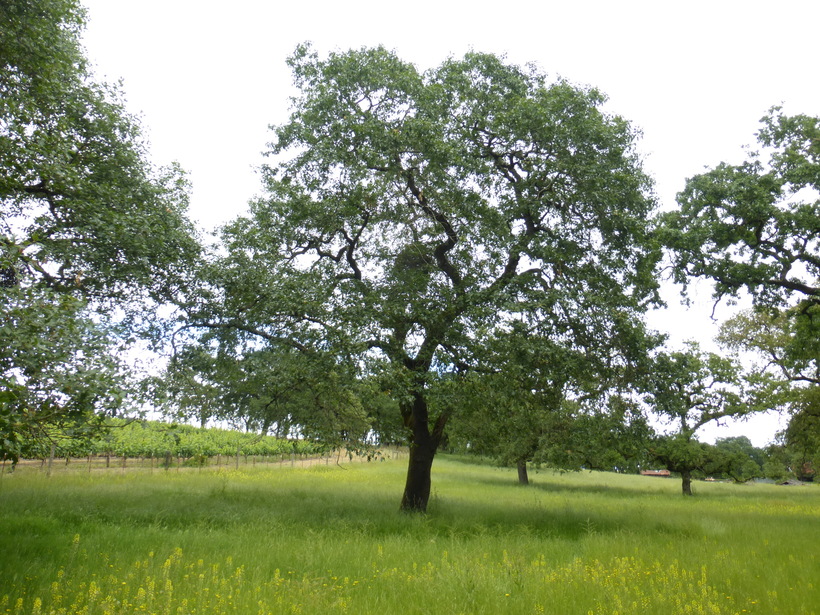
The California Black Oak gets its name from the dark bark color of mature trees. It has distinctive, deeply lobed leaves that turn brilliant shades of yellow and orange in the fall. It is a large deciduous tree that can grow up to 80 feet tall. It also has a large, spreading root system.
Black Oak acorns are an important food source for a wide range of wildlife, including birds, deer, squirrels, and other mammals. It is also a host plant for butterflies and moths. It is a drought-tolerant tree with low moisture requirements. Black Oak grows best in acidic soil.
Tree
20 - 120 ft Tall
35 ft Wide
Upright, Rounded, Upright Columnar
Moderate, Slow
Winter Deciduous
None

Yellow, Cream, Green
Spring, Winter
Bank stabilization, Deer resistant
Full Sun, Partial Shade, Deep Shade
Low, Moderate
Max 2x / month once established
Easy
Tolerates cold to 0° F
Medium
Occurs in many soil types. Prefers acidic soil.
Tolerates serpentine soil..
Soil PH: 5.0 - 8.0
Sterilize any cutting tools before and after pruning to prevent infections and avoid spreading Sudden Oak Death
By acorns. For propagating by seed: Fresh seeds sow in fall outdoors or stratify to hold for spring sowing. If started indoors or in glasshouse, stratify first for 1-2 mos. (USDA Forest Service 1974).
1, 2, 3, 4, 5, 6*, 7*, 8, 9, 14*, 15*, 16*, 17, 18*, 19, 20, 21
Slopes and valleys between 2, 000 and 8, 000 ft. in the Coast Ranges, Transverse Range, Peninsular Range, and lower elevations of the Sierra, where it is found as part of deciduous oak woodland, mixed evergreen forest, or other woodland/forest type
Mixed Evergreen Forest, Northern Oak Woodland, Yellow Pine Forest
Often found with Ponderosa Pine (Pinus ponderosa), White Fir (Abies concolor), Incense Cedar (Calocedrus decurrens) and Sugar Pine (Pinus lambertiana). Understory plants include Snowberry (Symphoricarpos albus, Hummingbird Sage Salvia spathacea), Larkspur (Delphinium spp.), Manzanita (Arctostaphylos spp.), Gooseberries (Ribes spp.), and ferns
Butterflies and moths supported
8 confirmed and 171 likely
Polyphemus moth
Antheraea polyphemus
Fruit-Tree Leafroller Moth
Archips argyrospila
Quercus kelloggii. (n.d.). Sevenoaks Native Nursery. Retrieved October 18, 2023, from https://www.sevenoaksnativenursery.com/native-plants/trees/quercus-kelloggii/