

Carried by 0 nurseries
View Availability at NurseryData provided by the participants of the Consortium of California Herbaria
View additional distribution information on the Jepson eflora
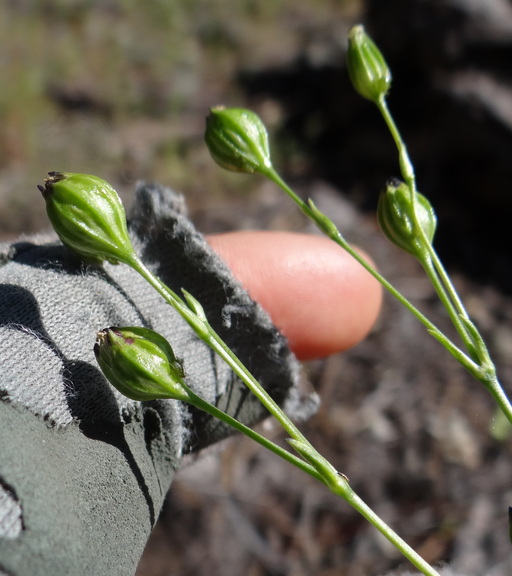
Silene antirrhina is a species of flowering plant in the pink family known by the common names sleepy silene and sleepy catchfly. It is native to the Americas, where it is widespread throughout North America and parts of South America. It is known in Europe as an introduced species. It can be found in a wide range of habitat types, including disturbed and recently burned areas. It is sometimes weedy. Silene antirrhina is quite variable in appearance, its morphology depending on several environmental factors, such as moisture level and available nutrients. In general it is an annual herb growing erect to a maximum height near 80 centimeters. The slender stem grows from a taproot and branches near the top. There are dark-colored internodes on the stem, the upper ones often glandular in sticky in texture. Insects become trapped in the sticky patches on this protocarnivorous plant, but it does not obtain any nutrients from them. The lance-shaped leaves are up to 6 centimeters long near the base of the stem, and are smaller and narrower farther up. The flower is enveloped in an inflated ovate calyx of fused sepals with ten veins. The calyx is open at the top, often revealing five double-lobed petals in shades of pink, red, or purple to white; the petals are sometimes absent.
Annual herb
3 ft Tall

White, Pink, Purple, Red
Low, Moderate
Weed (disturbed places)
Butterflies and moths supported
0 confirmed and 2 likely
Hitched Arches
Melanchra adjuncta
Rufous Quaker Moth
Protorthodes rufula