

Carried by 7 nurseries
View Availability at NurseryData provided by the participants of the Consortium of California Herbaria
View additional distribution information on the Jepson eflora
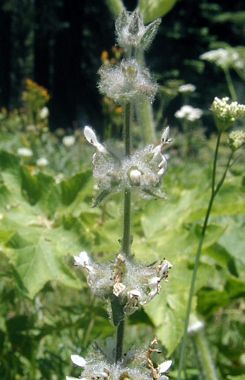
White Hedge Nettle, Stachys albens, is a mint endemic to California. The plant is fuzzy all over, with opposite, triangular, serrate leaves, a square stem, and a fragrant minty smell if bruised. It produces a layered spike of many small white to cream colored flowers with purplish veins. Each flower has a 2-lipped and 5-lobed calyx which is densely cobwebby.
Stachys albens occurs between sea level (0 ft.) and 9000 ft. (2740 m) in nature. It is found in moist to wet riparian, bog, seep, and swamp habitats within the following plant communities: Central, Foothill, and Southern Oak Woodland; Chaparral and Coastal Sage Scrub;, Valley Grassland; Wetland-Riparian; Yellow Pine Forest; Red Fir Forest; Lodgepole Pine Forest; California Mixed Evergreen Forest; and Pinyon-Juniper Woodland (Mojave and Colorado Deserts).
White Hedge Nettle is very easy to grow in sun (coast-high elevations) to part sun (coast-inland) in regularly watered landscape areas. It is a winter deciduous/dormant perennial plant, and in dryer gardens it may go partially or fully summer dormant/deciduous also. It spreads by rhizomes to the edge of moisture, and in consistently moist garden conditions can become invasive. Stachys albens is a larval host for the Variable Checkerspot. Butterfly.
Perennial herb
2 - 4 ft Tall
2 - 6 ft Wide
Mounding, Spreading
Fast
Winter Deciduous

White
Full Sun, Partial Shade
High, Moderate
Fast, Medium, Slow
Tolerant of a variety of garden soils as long as sufficient moisture is available.
Soil PH: 5 - 7.8
1, 2, 3, 4, 5*, 6*, 7*, 8*, 9*, 10, 14*, 15*, 16*, 17*, 18*, 19*, 20*, 21*, 22*, 23*, 24
Moist places
Coastal Sage Scrub, Foothill Woodland, Lodgepole Forest, Red Fir Forest, Yellow Pine Forest, Wetland-Riparian
Butterflies and moths supported
0 confirmed and 12 likely
Geranium Plume Moth
Amblyptilia pica
Garden Tiger Moth
Arctia caja
Orange Tortrix Moth
Argyrotaenia franciscana