

Carried by 0 nurseries
View Availability at NurseryData provided by the participants of the Consortium of California Herbaria
View additional distribution information on the Jepson eflora
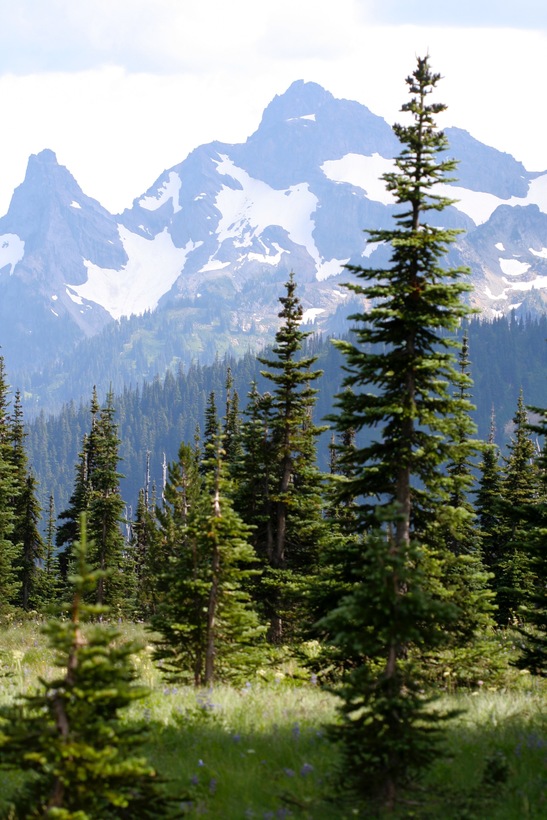
The Subalpine Fir (Abies lasiocarpa) is a species in the Pinaceae (Pine) family native to the mountains of the western U.S. In California it is restricted to the far northern part of the state in the Trinity Alps. It occurs at high altitudes, from 1,880 to 2,270 meters, and it is commonly found immediately below the tree line. It is a medium-sized tree growing to 20 meters tall, exceptionally to 40-50 meters tall, with a trunk up to 1 meter diameter, and a very narrow conic crown. The bark on young trees is smooth, gray, and with resin blisters, becoming rough and fissured or scaly on old trees. The leaves are flat needle-like, 1.5-3 centimeter long and waky green above, and blue-white stomatal bands below. The fresh leaf scars are reddish. They are arranged spirally on the shoot, but with the leaf bases twisted to be arranged to the sides of and above the shoot, with few or none below the shoot. The cones are erect, 6-12 centimeter long, dark blackish-purple with fine yellow-brown pubescence, ripening brown and disintegrating to release the winged seeds in early fall. This is a tree of the high mountains that is rarely seen in gardens.
Tree
15 - 98 ft Tall
Pyramidal
Slow
Evergreen
Spring
Full Sun, Partial Shade
Moderate
Medium
Prefers rich, forest soil with well-decomposed organic component derived from decaying wood. For garden purposes add redwood compost to soil mix.
Prune in winter when wood boring insects are less active.
Forests
Lodgepole Forest, Red Fir Forest, Subalpine Forest, Wetland-Riparian
Butterflies and moths supported
30 confirmed and 4 likely
Rusty Shoulder Knot Moth
Aseptis binotata
Mottled Gray Carpet
Cladara limitaria