

Carried by 1 nurseries
View Availability at NurseryData provided by the participants of the Consortium of California Herbaria
View additional distribution information on the Jepson eflora
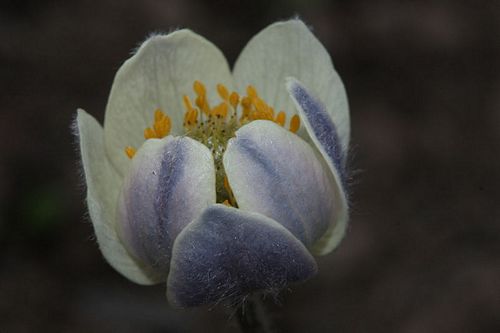
Anemone occidentalis (Western pasqueflower) is a herbaceous plant species in the genus Anemone and family Ranunculaceae. Often also placed in the genus Pulsatilla by other authorities. Plants grow 10 to 60 centimeter tall, from caudices. Plants normally produce 3 to 6 leaves at the base of the plant that are 3-foliolate, each leaflet pinnatifid to dissected in shape. Leaf petioles 6-10 centimeter long. Leaves with villous hairs margins pinnatifid or dissected. Plants flowering mid spring to mid summer with the flowers composed of 5 to 7 sepals (sometimes called petals) normally white or soft purple, also mixed white and blueish purple, one flower per stem, the sepals are 15 to 30 millimeter long and 10 to 17 millimeter wide. Flowers with 150-200 stamens. Fruits in heads rounded to subcylindric in shape, pedicels 15 to 20 centimeter long. The achenes are ellipsoid in shape, not winged, covered with villous hairs, with beaks curved that reflex as they age and 20-40 millimeter long, feather-like. Native to far western North America including British Columbia to California and Montana, it is found growing in gravelly soils on slopes and in moist meadows.
Perennial herb
4 - 30 in Tall

White, Pink, Purple, Blue
Full Sun
For propagating by seed: No treatment. (Emery and Frey 1971).
Open, rocky slopes
Lodgepole Forest, Red Fir Forest, Subalpine Forest, Yellow Pine Forest