

Carried by 4 nurseries
View Availability at NurseryData provided by the participants of the Consortium of California Herbaria
View additional distribution information on the Jepson eflora
Eastwood Manzanita is one of the many Manzanitas native to California. This Manzanita can be found along coastal slopes that stretch from Baja California all the way up through Oregon.
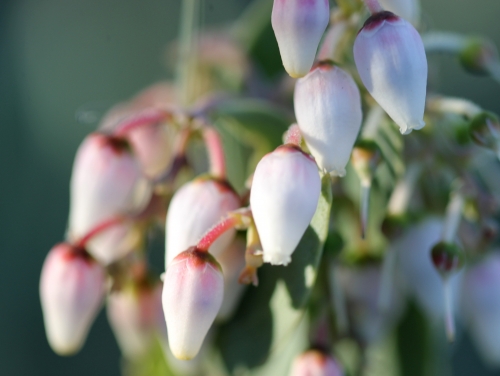
It is an evergreen shrub with edible fruit and white and pink flowers. It blooms during the spring and winter, attracting hummingbirds and other local pollinators. It can be bristly and sometimes hairy to the touch, it's also important to be mindful that it can secrete sticky oils.
It is ideal to plant Eastwood Manzanita in the spring so that it has ample time to establish before drier summer months. It should be watered weekly, up to a year after planting. Once established, it should be watered up to once a month. It likes sun or part shade.
Shrub
3 - 12 ft Tall
8 ft Wide
Rounded
Moderate
Evergreen
None

Pink, White
Winter, Spring
Bank stabilization, Groundcover, Hedge
Full Sun, Partial Shade
Low, Very Low
Max 2x / month once established
Moderate
Tolerates cold to 10° F
Fast, Medium
Often gravelly, decomposed granite soil.
Soil PH: 6.0 - 8.0
For propagating by seed: Soak in concentrated H 2 S04 for 4-15 hrs. (USDA Forest Service 1974). For the acid treatment, single nutlets and stone pieces (often without embryos) and entire stones should be treated separately, as they require different amounts of time in acid (Giersback 1937) For all species an alternate method is fire treatment in fall, this gives germination by spring. More easily propogated from tip cuttings in winter using bottom heat.
Rocky outcrops, slopes, ridges between 1, 000 and 6, 000 ft. At lower elevations it is a component of chaparral. At higher elevations it can be found in openings in evergreen forest
Chaparral, Mixed Evergreen Forest, Yellow Pine Forest
Companions can include the full range of chaparral plants from throughout the state
Butterflies and moths supported
0 confirmed and 55 likely
Western Avocado Leafroller Moth
Amorbia cuneana
Miranda Underwing
Amphipyra pyramidoides