

Carried by 14 nurseries
View Availability at NurseryData provided by the participants of the Consortium of California Herbaria
View additional distribution information on the Jepson eflora
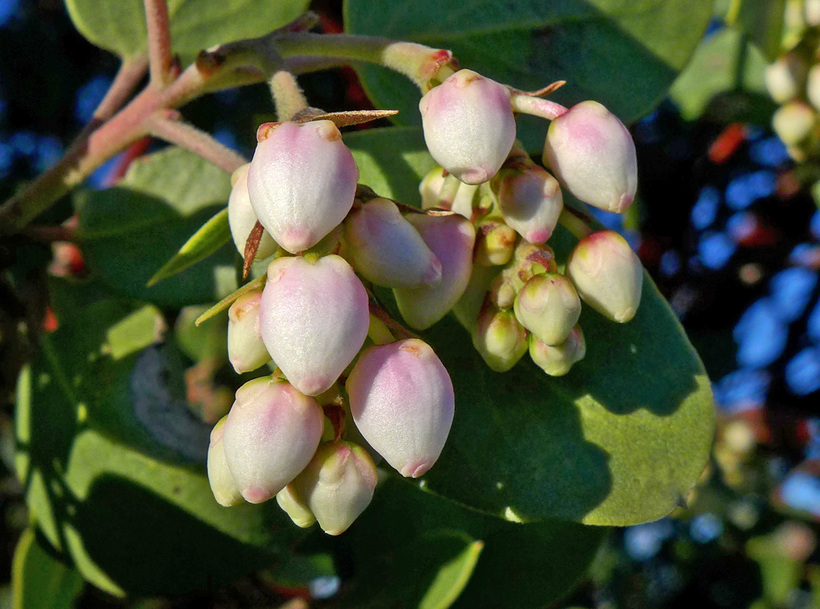
Common manzanita is a beautiful shrub: its red branching structure, delicate white lantern-shaped flowers, blush-colored berries, and bright foliage provide year-round interest. Use these gorgeous plants as specimen trees and to provide structure. Their graceful, twisting branches add an unbeatable sculptural effect. With their winter blooms and summer berries, they are a pollinator and wildlife all-star, supporting local birds and insects.
Common Manzanita is easy to grow in a variety of soils. It is low moisture but can tolerate some summer water. Outside of cultivation, it is commonly found in the northern part of the state.
There are many different species, hybrids, and varieties of Manzanitas native to California. They vary in size, flower color, and more, making them an excellent option for most gardens.
Shrub
6 - 20 ft Tall
10 ft Wide
Upright, Rounded, Upright Columnar
Moderate, Slow
Evergreen
None

White, Green
Winter, Spring
Hedge
Full Sun, Partial Shade
Low, Very Low
Max 1x / month once established
Easy
Tolerates cold to 10° F
Medium, Slow
Tolerant of clay or alluvial soil.
Soil PH: 4.0 - 7.0
Seeds must be fire treated to germinate.
Slopes, rocky places below 4, 000 ft., primarily in the North Coast Range and Sierra. It occurs in chaparral as well as foothill woodlands with oaks, pines and other trees.
Chaparral, Foothill Woodland, Northern Oak Woodland, Yellow Pine Forest
Works with a wide variety of other plants including Ceanothus species, scrub oaks, Salvias, Penstemons, Silk Tassel Bush (Garrya spp.), Flannel Bush (Fremontodendrons), and numerous subshrubs and annuals.
Butterflies and moths supported
2 confirmed and 54 likely