

Carried by 0 nurseries
View Availability at NurseryData provided by the participants of the Consortium of California Herbaria
View additional distribution information on the Jepson eflora
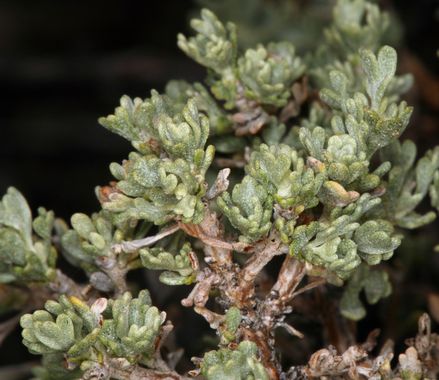
Artemisia nova is a species of sagebrush known by the common name black sagebrush. It is native to the western United States from California to Montana to New Mexico, where it grows in forest, woodland, and grassland habitats. It is "one of the most common shrubs in the western United States". Identification is sometimes difficult, because this species is similar in appearance to little sagebrush, Artemisia arbuscula, and it easily hybridizes with big sagebrush, Artemisia tridentata, when the it grows in the same area, leading to intermediate forms. Also, A. nova has two main morphological forms, a darker, easily recognized form, and a less common light gray-green colored variant which closely resembles other sagebrush species. In general, this is a small, erect shrub producing upright stems branched off a central trunklike base. It is usually no taller than 20 to 30 centimeters but it has been known to exceed 70 centimeters in height. The aromatic leaves are green, short, narrow, and sometimes toothed at the tip. This species can sometimes be distinguished from its similar-looking relatives by black-tipped hairy hairs on its leaves. The flower cluster bears clusters of flower heads lined with shiny, oily, yellow-green phyllaries with transparent tips. The fruit is a tiny achene up to a millimeter long. The plant reproduces from seed except in very rare occasions when it reproduces vegetatively by layering.
Shrub
8 - 24 in Tall
Mounding
Moderate

Yellow, Cream, White, Green
Summer
Groundcover
Full Sun
Low, Moderate
Adaptable, tolerant of sand, loam and clay.
1, 2*, 3*, 7, 15, 16, 17, 18, 19, 20, 21
Shallow rocky soils in desert valleys, dry slopes
Butterflies and moths supported
1 confirmed and 18 likely
Acute-lined Flower Moth
Schinia acutilinea
Painted Tiger Moth
Arachnis picta