

Carried by 73 nurseries
View Availability at NurseryData provided by the participants of the Consortium of California Herbaria
View additional distribution information on the Jepson eflora
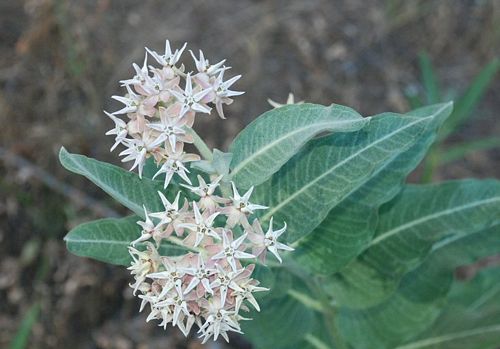
Named for its abundant clusters of starlike flowers, showy milkweed (Asclepias speciosa) is an eye-catching native plant selection for the butterfly garden. In the summer months, showy milkweed is covered in fragrant blooms in delicate shades of pink, white, and purple. The large leaves are an attractive grayish-green color.
After blooming, the plant produces large pods that contain seeds with long silky tassels, so they can be dispersed by the wind. Individual plants spread by underground rhizomes into an expanding clump. Showy milkweed has thick, sturdy stems and an upright growth habit. It can reach up to 6 ft in height. The plant goes dormant during the winter months.
Showy milkweed is an important butterfly host plant, especially for the Monarch butterfly. Adult butterflies feed on the flower nectar and caterpillars eat the leaves. The blooms also attract hummingbirds. Like other milkweeds, this plant produces alkaloids that, when consumed, protect the caterpillars from predators.
Showy milkweed is easy to care for. It grows well in full sun and should be planted in dry, well-drained soil. Remove seed pods to prevent self-sowing. Large clumps can be pruned during the winter dormancy season.
Perennial herb
4 - 6 ft Tall
4 ft Wide
Upright, Spreading, Upright Columnar
Moderate
Winter Deciduous
Pleasant

Purple, Pink, White
Summer
Deer resistant
Full Sun
Very Low, Low
Max 2x / month once established
Easy
Tolerates cold to -5° F
Fast, Medium
Tolerates clay soil but performs best with good drainage.
Soil PH: 6.0 - 8.5
If a clump becomes too large, excess rootstock can be pruned during the winter when the plant is dormant
from seed there are two optionsA. Place the seeds on a bowl with lid in some water or a damp paper towel and place in the fridge for a few weeks or until sprouted. When sprouted place the sprouts flat on their sides into some damp soil. Cover with a very thin layer of soil. These plants should be planted directly into the ground. They don't transplant well due to long roots (rhizomes)B. Throw seeds onto desired area during the cold months of the year and allow the rain to water themPlant in full sun
1, 2*, 3*, 4, 5, 6*, 7*, 8*, 9*, 10*, 14*, 15*, 16, 17, 18*, 19, 20, 21, 22, 23, 24
Flats, meadows, seasonally moist soils, typically in mountainous areas, although it is also found in the central valley
Chaparral, Mixed Evergreen Forest, Wetland-Riparian, Yellow Pine Forest
Butterflies and moths supported
1 confirmed and 4 likely
Monarch
Danaus plexippus
Queen
Danaus gilippus
Clio Tiger Moth
Ectypia clio
Hitched Arches
Melanchra adjuncta
Calscape; Missouri Botanical Garden, Asclepias speciosa.
Nyunt, P., & Wilson, B. (2020). Asclepias speciosa: California showy milkweed.
Las Pilitas Nursery. https://www.laspilitas.com/nature-of-california/plants/101--asclepias-speciosa