

Carried by 4 nurseries
View Availability at NurseryData provided by the participants of the Consortium of California Herbaria
View additional distribution information on the Jepson eflora
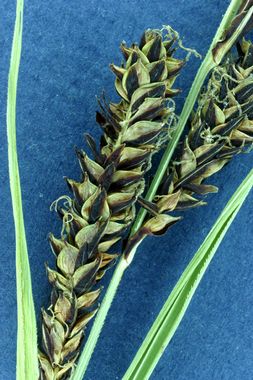
Carex aquatilis is a species of sedge known by the common names water sedge and leafy tussock sedge. It has a circumboreal distribution, occurring throughout the northern reaches of the Northern Hemisphere. It grows in many types of mountainous and Arctic habitat, including temperate coniferous forest, alpine meadows, tundra, and wetlands. There are several varieties of this species, and it is somewhat variable in appearance. It produces triangular stems reaching heights between 20 centimeters and 1.5 meters, and generally does not form clumps as some other sedges do. It grows from a dense rhizome network which produces a mat of fine roots thick enough to form sod, and includes aerenchyma to allow the plant to survive in low-oxygen substrates like heavy mud. The flower cluster bears a number of spikes with one leaflike leaf at the base which is longer than the flower cluster itself. The fruits are glossy achenes, and although the plant occasionally reproduces by seed, most of the time it reproduces vegetatively, spreading via its rhizome. In fact, in any given year, most shoots produce no flowers. This perennial plant lives up to 10 years or more, can form peat as its rhizome system decomposes, and is sometimes used to revegetate areas where peat has been harvested.
Grass
8 - 59 in Tall
Upright
Moderate

Green
Summer
Containers
Partial Shade
Moderate, High
Moderate
Prefers loamy or clay soils. Grows poorly in sandy soils.
Wet places
Lodgepole Forest, Red Fir Forest, Subalpine Forest, Yellow Pine Forest, Wetland-Riparian
Butterflies and moths supported
0 confirmed and 7 likely
Common Ringlet
Coenonympha tullia
Olive Green Cutworm Moth
Dargida procinctus
Dun Skipper
Euphyes vestris
American Crescent Borer
Helotropha reniformis