

Carried by 2 nurseries
View Availability at NurseryData provided by the participants of the Consortium of California Herbaria
View additional distribution information on the Jepson eflora
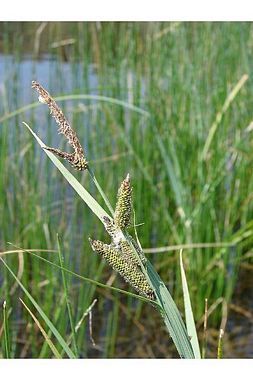
Carex nebrascensis is a species of sedge known by the common name Nebraska sedge. It is native to the western and central United States and into central Canada, where it grows in wetlands. It tolerates alkaline soils and submersion for long periods of time. This sedge produces upright, angled, spongy stems up to about 90 centimeters tall. The waxy, bluish leaves form tufts around the base of each stem. The root system is a very dense network of rhizomes. The flower cluster includes a few narrow staminate spikes above some wider pistillate spikes on short peduncles. The fruit is covered in a tough, slightly inflated sac called a perigynium which sometimes has a pattern of red spotting. Uses for this sedge include forage for livestock and wild animals, wetland restoration, control of erosion and soil compaction, and natural wetland wastewater treatment.
Grass
3 ft Tall
Upright
Moderate

Green
Spring
Containers
Full Sun
Moderate
Standing
Adaptable, tolerant of sand, loam and clay.
1, 2, 3, 4*, 5*, 6*, 7*, 8, 9, 14*, 15*, 16*, 17*, 18*
Meadows, swamps
Creosote Bush Scrub, Lodgepole Forest, Pinyon-Juniper Woodland, Red Fir Forest, Subalpine Forest, Yellow Pine Forest, Wetland-Riparian
Butterflies and moths supported
0 confirmed and 7 likely
Common Ringlet
Coenonympha tullia
Olive Green Cutworm Moth
Dargida procinctus
Dun Skipper
Euphyes vestris
American Crescent Borer
Helotropha reniformis