

Carried by 0 nurseries
View Availability at NurseryData provided by the participants of the Consortium of California Herbaria
View additional distribution information on the Jepson eflora
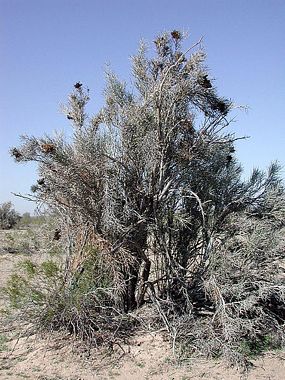
Castela emoryi, with the common names Crucifixion thorn and Emory's crucifixion-thorn, is a shrub species in the genus Castela of the order Sapindales. The plant is native to the Mojave Desert and Sonoran Deserts of North America. It is found in southern California, Arizona, and Sonora state (México). Castela emoryi is often less than 1 metre (3. 3 ft), and occasionally to grows 4 metres (13 ft) or more. It is ranked on the California Native Plant Society Inventory of Rare and Endangered Plants, as an endangered species within California, and more common elsewhere. It is threatened by solar energy development and military activities within its California range. Uses. The Yavapai people traditionally used this as a medicinal plant, making a dermatological aid from its bud's sap. Insecticide and fungicide. Castela emoryi is a plant toxin insecticide. It contains quassinoids such as glaucarubolone glucoside which has antifeedant properties against termites such as Reticulitermes flavipes, or potential fungicidal activity for the control of grape downy mildew. It also contains glaucarubol, a compound characteristic of the family, ellagic acid, betulin and (-)-syringaresinol.
Shrub
3 ft Tall
Full Sun
Fast
For propagating by seed: No treatment.
Dry gravelly washes and slopes
Creosote Bush Scrub
Butterflies and moths supported
0 confirmed and 1 likely
Ailanthus Webworm Moth
Atteva aurea