

Carried by 2 nurseries
View Availability at NurseryData provided by the participants of the Consortium of California Herbaria
View additional distribution information on the Jepson eflora
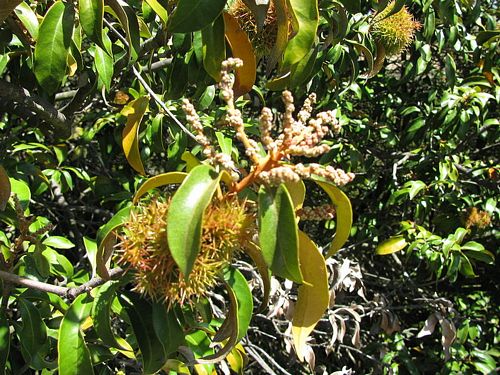
Chrysolepis chrysophylla is a species of flowering plant in the beech family known by the common names golden chinquapin, giant chinquapin, and western chinquapin. It is native to the Pacific coast of the United States from west-central Washington to central California. This plant is a shrub or tree. Shrubby forms of the plant occur in dry areas, higher elevations, and poor soils. The plant grows into a tree up to 45 metres (148 ft) tall in cooler, moister areas such as valley bottoms and north-facing slopes, and foggy and rainy areas. The bark is thin and smooth on young trunks; on older specimens it becomes thicker and platy. The open crown of the large tree is conical in shape. The leathery evergreen leaves are dark green on the upper sides and golden underneath. The leaves are folded upward along the midrib. The species is monoecious, with individuals bearing both male and female flowers. White male flowers are borne in the leaf axils, and a cluster of female flowers is borne beneath them. A spiny bur contains one to three nuts. There is generally a burl at the base of the tree. The tree may sprout from adventitious buds in the burl, a form of vegetative reproduction that is more common in dry areas where it is less likely that seedlings would become established. The tree may live up to 500 years.
Shrub, Tree
98 - 148 ft Tall
Evergreen

Yellow, Cream, White
Spring
Full Sun, Partial Shade
Low
1, 2, 3, 4*, 5*, 6*, 7, 14, 15, 16, 17, 18
Chaparral, Closed-cone Pine Forest, Forest, Yellow Pine Forest
Butterflies and moths supported
4 confirmed and 7 likely
Golden Hairstreak
Habrodais grunus
Lappet Moth
Phyllodesma americana
Stenomid Oak Leaf Tier
Rectiostoma fernaldella