

Carried by 0 nurseries
View Availability at NurseryData provided by the participants of the Consortium of California Herbaria
View additional distribution information on the Jepson eflora
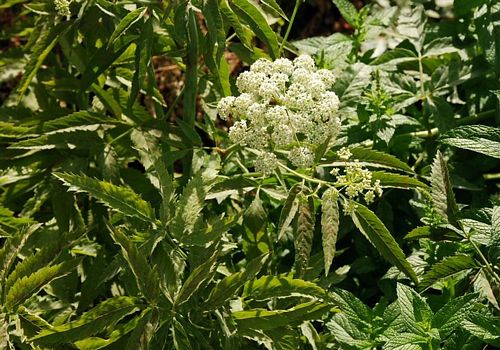
Cicuta douglasii (Western water hemlock) is a poisonous plant in the family Apiaceae. It is a perennial plant that grows in wet places such as marshes, stream banks, slough margins, ditches, meadows, and wet pastures. The roots of this plant are thick and tuberous, with many smaller tubers coming from the main tuber. This root structure allows the water hemlock to adapt and survive wet conditions. Water hemlock is most abundant in British Columbia, and is indigenous to North America. In North America it primarily grows from the base of the Rocky Mountains to the Pacific coast, stretching all the way from Alaska down to California. Water necessities limit this plant from growing in open rangelands. The characteristics of water hemlock include its stem which is 0.5-2 meters tall with purplish spots, thick roots, and leaves that are compound pinnate and alternate. The leaflets are usually 5-8 centimeter long and 1-2 centimeter wide with jagged edges. The flowers on it are compound umbellate flower clusters with many small, white flowers. There are two seeds for each flower. Seed dispersal for water hemlock seeds comes from means of wind, water, machinery, on clothing, and through transported soil. The seeds germinate in spring, and flowers mature near the end of June and beginning of July. In addition to sprouting new plants from seeds, rootstocks can also product new plants. These are formed in the fall from the basal meristem, and when they detach the following spring, they may form a new plant.
Perennial herb
2 - 10 ft Tall
Upright
Fast

White
Spring
Partial Shade
Moderate, High
Prefers loamy or clay soils. Grows poorly in sandy soils.
Wet places, often in water
Chaparral, Foothill Woodland, Lodgepole Forest, Red Fir Forest, Subalpine Forest, Valley Grassland, Yellow Pine Forest, Wetland-Riparian
Butterflies and moths supported
1 confirmed and 4 likely
Black Swallowtail
Papilio polyxenes
Fruit-Tree Leafroller Moth
Archips argyrospila
White Spot Pug
Eupithecia tripunctaria