

Carried by 3 nurseries
View Availability at NurseryData provided by the participants of the Consortium of California Herbaria
View additional distribution information on the Jepson eflora
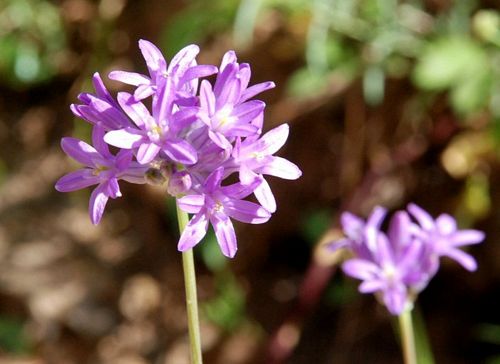
Dichelostemma multiflorum is one of several species in the Themidaceae sometimes referred to as Wild Hyacinth. The genus Dichelostemma was previously included with Brodiaea, and some sources still refer to it by that name. This species is a native perennial herb that grows from a corm. It is found primarily in inland northern California, from Mariposa County northward, where it is found in grassy and open places at elevations from 0-5,000 feet. This species is somewhat less popular for garden use compared with others in the genus, but it is a good choice for mountain gardens in the Sierras and Cascades.
Perennial herb, Geophyte
3 ft Tall
1 ft Wide
Summer Deciduous

Blue, Lavender
Spring
Full Sun, Partial Shade
Very Low
Max 2x / month once established
Tolerates cold to 0° F
Medium, Slow
Prefers heavy soils but tolerates a variety of garden soils.
Can be grown from seed but more commonly from an established corm
5, 6, 7*, 8, 9, 14*, 15*, 16*, 17*, 18*, 19*, 20*, 21*, 22*, 23*, 24*
Grassy and open places
Foothill Woodland, Yellow Pine Forest
Like other members of the genus, it is most effective when massed. Individual corms will not bloom every year. Use with annuals, herbaceous perennials, or geophytes such as onion (Allium spp.), Brodiaea spp., Mariposa Lily (Calochortus spp.), Poppy (Eschscholzia spp. or Papaver spp.), Baby Blue Eyes (Nemophila menziesii), and Lily (Lilium spp.)