

Carried by 45 nurseries
View Availability at NurseryData provided by the participants of the Consortium of California Herbaria
View additional distribution information on the Jepson eflora
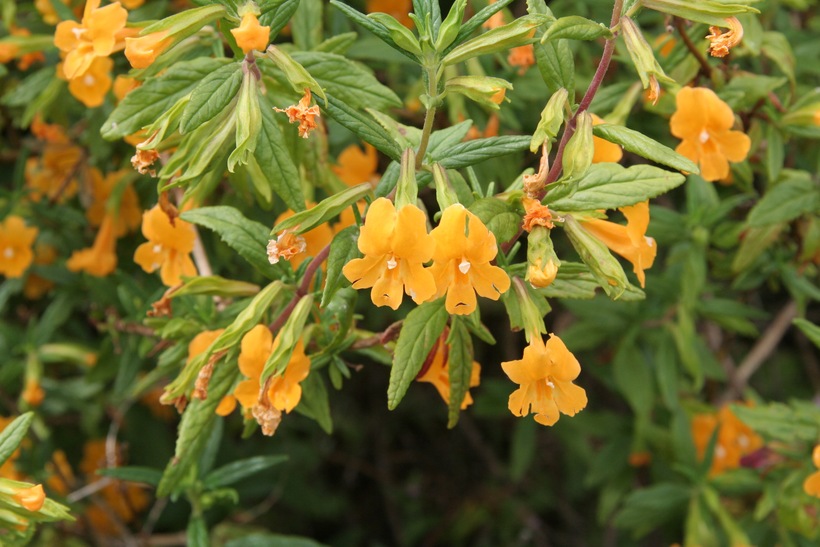
The bush monkey flower is notable for its cheerful orange and yellow blooms, said to resemble a monkey's face. It's also sometimes called sticky monkey flower because the leaves produce a protective sticky resin. It is a perennial subshrub with flowers that attract hummingbirds and bees.
This low-water plant tolerates a variety of soil types, as long as they are well-draining. In coastal areas, bush monkey flower likes full sun; plant in partial shade in inland gardens.
Shrub
4 - 5 ft Tall
5 ft Wide
Mounding, Spreading
Moderate
Evergreen
None

Orange, Red, White, Yellow
Winter, Spring, Summer
Deer resistant
Partial Shade, Full Sun
Very Low, Low
Max 1x / month once established, Max 2x / month once established
Tolerates cold to 15° F
Fast, Medium
Tolerant of difficult soils if adequate drainage is provided.
Tolerates serpentine soil..
Soil PH: 5.0 - 8.0
Deadhead to increase flower production. Pinch back new growth in spring to maintain more compact form.
From seed or cuttings
4, 5, 7*, 8, 9, 14*, 15*, 16*, 17*, 18, 19*, 20*, 21*, 22*, 23*, 24*
Rocky or sandy hillsides, cliffs, canyon slopes, disturbed places in a wide variety of vegetation communities including Chaparral, Coastal Scrub, Pine Forest, Redwood Forest, Mixed Evergreen Forest, Oak Woodland, Foothill Woodland, and Joshua Tree Woodland
Chaparral, Foothill Woodland, Joshua Tree Woodland, Northern Coastal Scrub, Northern Oak Woodland
Due to its occurrence in many habitats, Sticky Monkeyflower is associated with hundreds of other plants
Butterflies and moths supported
1 confirmed and 7 likely
Variable Checkerspot
Euphydryas chalcedona
Orange Tortrix Moth
Argyrotaenia franciscana
Sticky Monkey-flower. (2018, September 4). Golden Gate National Parks Conservancy. https://www.parksconservancy.org/conservation/sticky-monkey-flowerDiplacus aurantiacus, Sticky Monkey Flower. (n.d.). Www.laspilitas.com. Retrieved October 18, 2023, from https://www.laspilitas.com/nature-of-california/plants/242--diplacus-aurantiacus