

Carried by 10 nurseries
View Availability at NurseryData provided by the participants of the Consortium of California Herbaria
View additional distribution information on the Jepson eflora
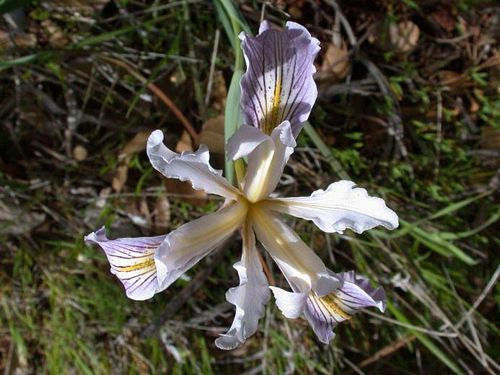
Iris macrosiphon (Long Tubed Iris) is a flowering plant in the Iridaceae (Iris) family, endemic to California in the Cascade Range Foothills, north and central Sierra Nevada Foothills, Inner North Coast Ranges, and San Francisco Bay Area, where it occurs in sunny grasslands, meadows, and open woodlands. The typical iris leaves are very slender, arching, strap-like, 2.5-5 millimeter wide, and blue-green in color. The flower is highly variable, from golden yellow to cream or pale lavender to deep blue-purple, generally with darker veins. In the wild it is usually found in clumps of the same general color. The flower stems are usually short (less than 25 centimeter) when in the sun and bear 2 flowers. It blooms in spring. It may go deciduous if subjected to summer heat or dryness.
Perennial herb, Geophyte
1 - 2 ft Tall
1 ft Wide
Moderate
Summer Semi-deciduous, Winter Deciduous

Blue, Cream, Lavender, Pink, Purple, White, Yellow
Spring
Deer resistant
Full Sun, Partial Shade
Low
Max 2x / month once established
Moderate
Tolerates cold to 15° F
Medium
Prefers damp loamy soil with plenty of organic matter.
Soil PH: 6.0 - 8.0
For propagating by seed: No treatment. Sow in early fall outdoors.
6*, 7, 8, 9, 14*, 15*, 16*, 17*, 18
Open slopes of northern California as part of woodland, forest, grassland or meadow
Foothill Woodland, Mixed Evergreen Forest, Northern Oak Woodland, Yellow Pine Forest
Use as an understory with most native trees of northern California
Butterflies and moths supported
0 confirmed and 2 likely
American Ear Moth
Amphipoea americana
Verbena Bud Moth
Endothenia hebesana