

Carried by 21 nurseries
View Availability at NurseryData provided by the participants of the Consortium of California Herbaria
View additional distribution information on the Jepson eflora
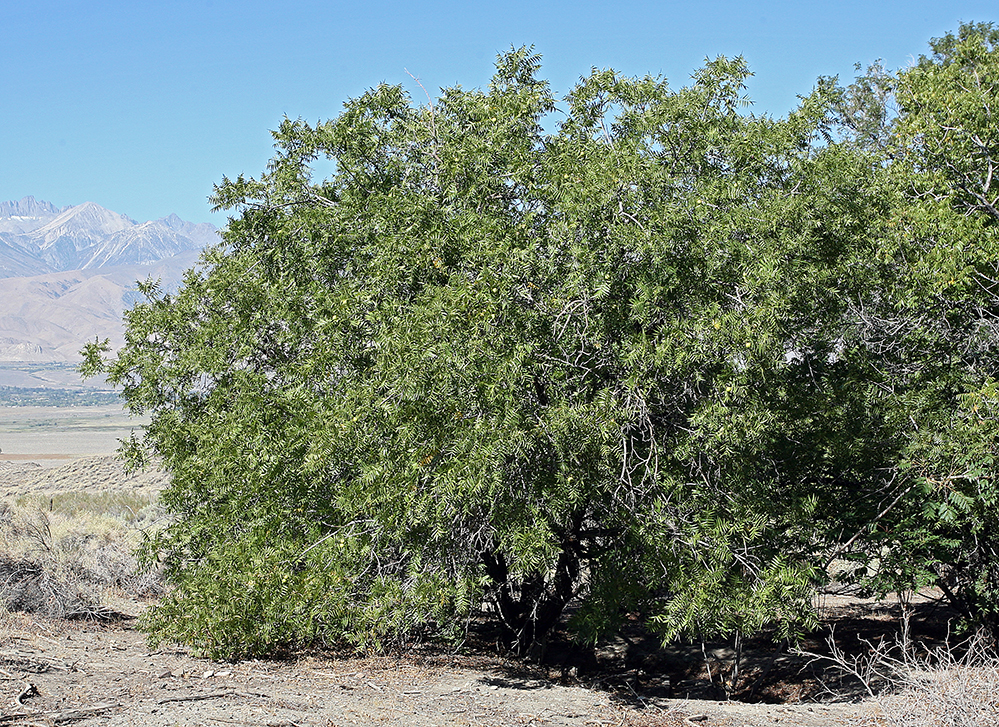
Northern California black walnut (Juglans hindsii) is a large, deciduous tree native to central and northern California. It often grows with a single, straight trunk, reaching heights of 30 to 60 feet with a broad, spreading crown. The tree produces smooth, brown nuts with thick shells and small edible nutmeats. It is commonly used as a rootstock for English walnut orchards worldwide, often hybridized as ‘Paradox’ (J. hindsii x J. regia).
With its deep taproot and resistance to frost, Northern California black walnut thrives in warm, sunny environments. Its leaves emerge late in spring, providing dense summer shade. The tree also supports wildlife, offering food and shelter for deer, squirrels, and various bird species.
While prized for its durable wood in furniture-making and gunstocks, it also serves as a beautiful shade tree in larger landscapes.
Tree
60 ft Tall

Green, White
Spring
Full Sun
Low, Moderate
Fast, Medium, Slow
Tolerates sand and clay soils.
For propagating by seed: 22.5 wks. stratification; soaking seeds first at 190°F for 1.5 to 2 min. first may reduce stratification time (USDA Forest Service 1974 ).
4*, 5*, 6*, 7*, 8, 9, 10, 11, 14*, 15*, 16*, 17*, 18*, 19*, 20*, 21*, 22*, 23*, 24*
Slopes, canyons, valleys
Butterflies and moths supported
0 confirmed and 25 likely
Yellow-Haired Dagger Moth
Acronicta impleta
Fall Cankerworm Moth
Alsophila pometaria
Miranda Underwing
Amphipyra pyramidoides
Navel Orangeworm
Amyelois transitella