

Carried by 1 nurseries
View Availability at NurseryData provided by the participants of the Consortium of California Herbaria
View additional distribution information on the Jepson eflora
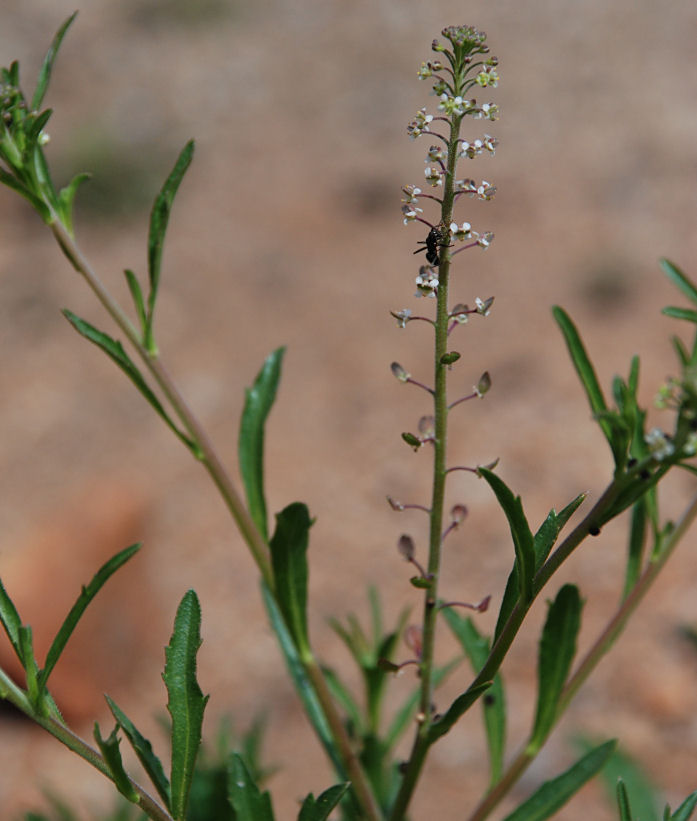
Lepidium virginicum, also known as least pepperwort, Virginia pepperweed or peppergrass, is an annual or biennial plant in the Brassicaceae or mustard family. It is native to much of North America, including most of the United States and Mexico and southern regions of Canada, as well as most of Central America. It can be found elsewhere as an introduced species. As with Lepidium campestre, Virginia pepperweed's most identifiable characteristic is its raceme, which comes from the plant's highly branched stem. The racemes give Virginia pepperweed the appearance of a bottlebrush. On the racemes are first small white flowers, and later greenish fruits. The entire plant is generally between 10 and 50 centimeters tall. The leaves on the stems of Virginia pepperweed are sessile, linear to lanceolate and get larger as they approach the base. Note that all parts of the plant have a peppery taste. Cultivation and uses. Virginia pepperweed grows as a weed in most crops and is found in roadsides, landscapes and waste areas. It prefers sunny locales with dry soil. The plant is edible. The young leaves can be used as a potherb, sauted or used raw, such as in salads. The young seedpods can be used as a substitute for black pepper. The leaves contain protein, vitamin A and vitamin C.
Annual herb
4 - 19 in Tall

White, Green
Chaparral, Coastal Sage Scrub
Butterflies and moths supported
2 confirmed and 7 likely
Pearly Marble
Euchloe hyantis
Checkered White
Pontia protodice
Gray Marble
Anthocharis lanceolata
Large Marble
Euchloe ausonides