

Carried by 2 nurseries
View Availability at NurseryData provided by the participants of the Consortium of California Herbaria
View additional distribution information on the Jepson eflora
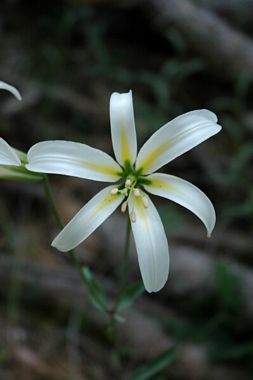
Lilium washingtonianum is a ]] native to the Cascade Range and Sierra Nevada of western North America. It is also known as the ashington Lily,' Shasta Lily, or Mt. Hood Lily. It is named after Martha Washington and not the state of Washington; in fact, as the northern range of the plant is near Mount Hood in Oregon, it does not naturally occur in the state of Washington. Its range is limited to the states of California and Oregon. It grows up to 2 meter tall, and bears large fragrant white or pinkish flowers that are often decorated with purplish spots. The petals are 6 to 9 centimeter long and not strongly reflexed. It is typically found in chaparral, open woods, recently burned areas, or revegetating clearcuts.
Perennial herb, Geophyte
1 - 7 ft Tall

White, Pink, Purple
Summer
Full Sun, Partial Shade
Moderate
Moderate
.
Soil PH: 5.2 - 6.8
For propagating by seed: Sow outdoors in summer for germination the following spring, or 3-6 mos. warm then 2-3 mos. cold stratification. Seeds may also give good germination by spring if sown outdoors in early fall. For forcing slightly green or fresh seeds: 6-8 wks. warm (70°F) stratification or until the majority of seeds have formed bulblets; then 4-6 wks. cold (about 35°FJ stratification; sow, and at 55 to 60°F leaves should be produced in 4-6 wks. (De Graaff 1951).
Open places
Chaparral, Red Fir Forest, Yellow Pine Forest
Butterflies and moths supported
0 confirmed and 2 likely
Reaper Dart
Euxoa messoria
Virginian Tiger Moth
Spilosoma virginica