

Carried by 7 nurseries
View Availability at NurseryData provided by the participants of the Consortium of California Herbaria
View additional distribution information on the Jepson eflora
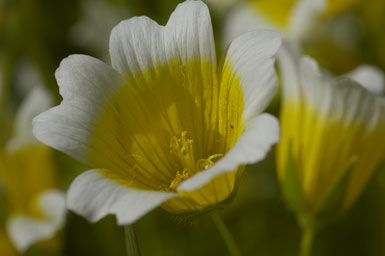
Limnanthes douglasii is a species of flowering plant in the meadowfoam family commonly known as poached egg plant and Douglas' meadowfoam. It is native to California and Oregon, where it grows in wet, grassy habitat, such as vernal pools and spring meadows. It can grow in poorly drained clay soils. The plant was collected by the Scottish explorer and botanist David Douglas, who worked on the west coast of America in the 1820s. The plant usually bears white flowers with yellow centers, hence the name "poached egg plant", but flower color can vary across subspecies. It is a popular ornamental plant. It attracts hoverflies to the garden to beat the aphids and is well loved by bees. It is self-seeding, and gardeners are often careful as to where the seeds fall as it will quite happily grow in a lawn.
Annual herb
2 ft Tall
6 in Wide
Spreading

Cream, Yellow, White
Spring, Summer
Full Sun, Partial Shade
Low, Moderate, High
Keep moist
Easy
Tolerates cold to 15° F
Slow
Must have poorly drained clay soil.
Cut back after flowering
Collect seeds by allow pods to dry on plant and then break open to collect seeds. Sow seeds spring or autumn and protect autumn sowings from frost. Will also reseed on its own.
Wet meadows, edges of vernal pools, seasonal streams
Foothill Woodland, Northern Coastal Scrub, Valley Grassland, Wetland-Riparian
Include with other moisture-loving plants that can also tolerate sun such as Stream Orchid, Creek Dogwood (Cornus sericea ssp. sericea), and Twinberry.