

Carried by 51 nurseries
View Availability at NurseryData provided by the participants of the Consortium of California Herbaria
View additional distribution information on the Jepson eflora
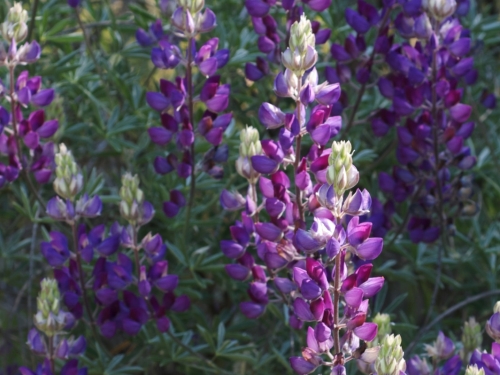
The evergreen silver lupine provides year-round interest in the garden. A member of the pea family, it has attractive silver-green leaves that add a pop of color and texture to the garden. In the spring, it boasts large flower spikes that range in color from pale blue to deep purple. The blooms are attractive to pollinators, especially bees.
This stunning shrub prefers dry, sandy, well-drained soil. No need to add compost; silver lupines do best in nutrient-poor soil. Plant in full sun and limit summer water. This plant can be short-lived but does well in the right conditions.
Shrub
3 - 5 ft Tall
2 - 3 ft Wide
Mounding, Spreading
Fast
Evergreen
Pleasant

Blue, Lavender, Purple
Winter, Spring, Summer
Deer resistant
Full Sun
Low, Very Low
Max 2x / month once established
Easy
Tolerates cold to -10° F
Fast
Occurs in a variety of soils.
Soil PH: 6.0 - 8.0
By seed
Because this species occurs in such diverse parts of the state, it may be found in a number of settings and habitats including chaparral or coastal sage scrub in seaside conditions on coastal terraces, bluffs, canyons or mesas, as well as open areas in coastal or foothill woodlands with evergreen forest
Chaparral, Coastal Sage Scrub, Foothill Woodland, Northern Coastal Scrub, Yellow Pine Forest
Because this species occurs over such a large part of the state in different habitats, it has many companion plants in the wild. In the garden, plant with other species that prefer fast drainage and moderately dry conditions.
Butterflies and moths supported
8 confirmed and 49 likely
Arrowhead Blue
Glaucopsyche piasus
Bornstein, David, et al. California Native Plants for the Garden. Cachuma Press, 2005.