

Carried by 0 nurseries
View Availability at NurseryData provided by the participants of the Consortium of California Herbaria
View additional distribution information on the Jepson eflora
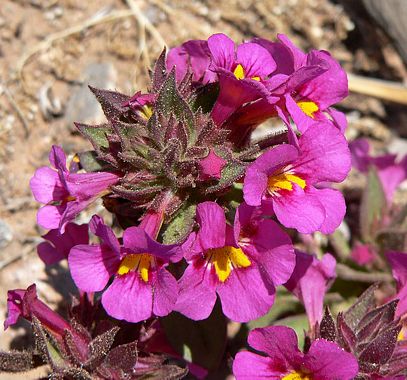
Mimulus bigelovii is a species in the Phrymaceae (Lopseed) family known by the common name Bigelow's monkeyflower. It is native to the southwestern United States, where it grows in desert and slope habitat. This is a hairy annual herb producing an erect stem 2 to 25 centimeters tall. The plant is variable in size and shape as well as color, the herbage being green to nearly red in color. The pointed oval or rounded leaves are each up to 3.5 centimeters long and arranged in opposite pairs about the stem. The tubular base of the flower is surrounded by a reddish-green or purple ribbed calyx of hairy sepals with long lobe tips. The trumpet-shaped flower corolla is roughly one to two centimeters long and has a very narrow tube and a wide mouth. The corolla has two upper lobes and three lower, and is generally magenta or deep pink in color with darker red, purple, and yellow spots in the throat. This plant is seldom seen in the garden but is common in desert canyons in spring of good rainfall years.
Annual herb
0.8 - 10 in Tall

Pink
Winter, Spring
Containers
Full Sun
High
Never irrigate once established
Moderate
Tolerates cold to -5° F
Fast
Sandy, decomposed granite or limestone.
Rocky desert slopes, edges of washes
Creosote Bush Scrub, Joshua Tree Woodland, Pinyon-Juniper Woodland, Sagebrush Scrub
Butterflies and moths supported
0 confirmed and 9 likely
Orange Tortrix Moth
Argyrotaenia franciscana
Variable Checkerspot
Euphydryas chalcedona