

Carried by 1 nurseries
View Availability at NurseryData provided by the participants of the Consortium of California Herbaria
View additional distribution information on the Jepson eflora
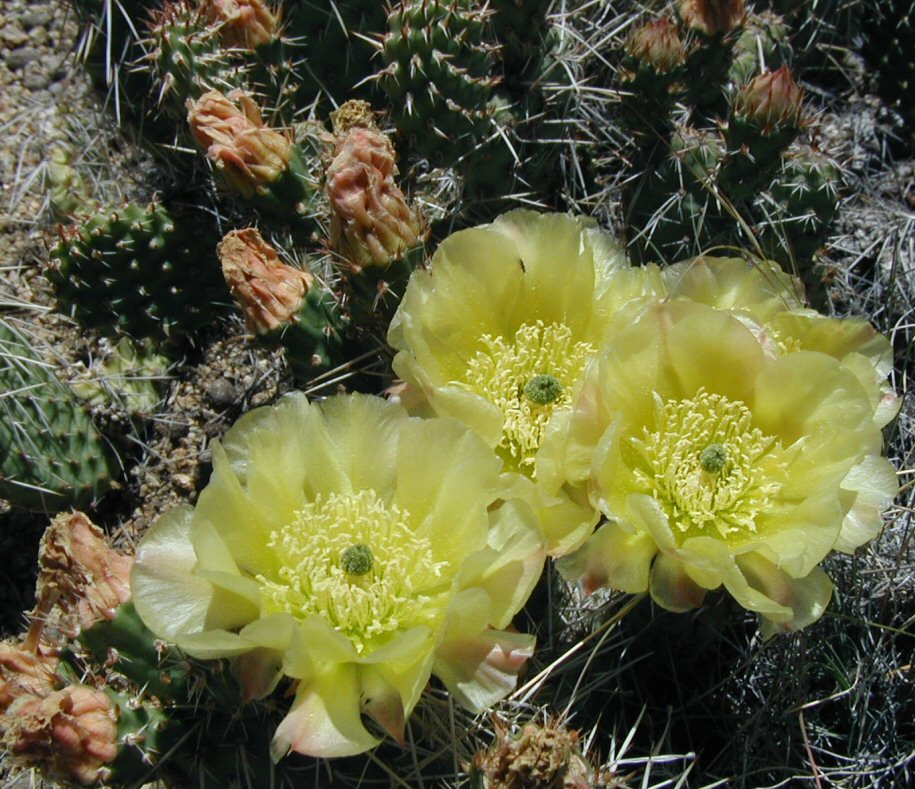
Opuntia polyacantha is a common species of cactus known by the common names plains pricklypear, hairspine cactus, panhandle pricklypear, and starvation pricklypear. It is native to North America, where it is widespread in Western Canada, the Great Plains, the central and Western United States, and Chihuahua in northern Mexico. This cactus grows in a wide variety of habitat types, including sagebrush, Ponderosa pine forest, prairie, savanna, shrublands, shrubsteppe, chaparral, pinyon-juniper woodland, and scrub. Opuntia polyacantha grows up to 40 centimetres (16 in) tall. It forms low mats of pads which may be 2-3 metres (6. 6-9. 8 ft) wide. Its succulent green pads are oval or circular and reach 27 by 18 centimetres (10. 6 by 7. 1 in) wide. Its areoles are tipped with woolly brown fibers and glochids. Many of the areoles have spines which are quite variable in size and shape. They may be 0. 4 to 18. 5 centimetres (0. 16 to 7. 28 in) in length, stout or thin, straight or curling, and any of a variety of colors. The flowers are 2. 5 to 4 centimetres (0. 98 to 1. 57 in) long and may be yellow or magenta in color. The fruit is cylindrical, brownish, dry and spiny. The cactus reproduces by seed, by layering, and by resprouting from detached segments. Uses. Native Americans used it as a medicinal plant, with different parts treating various symptoms. This pricklypear provides food for many types of animals. It provides over half the winter food for the black-tailed prairie dog in one area. Pronghorn deer eat it, especially after the spines are burned off in wildfires. Ranchers intentionally burn stands of the plant to make it palatable for livestock when little other food is available. It will also grow in waste areas where good forage will not take hold. In fact, an abundance of the cactus indicates land that is poor in quality. Several insects attack the cactus, including the cactus moth Melitara dentata, the blue cactus borer Olycella subumbrella, and the cactus bug Chelinidea vittiger.
Shrub, Succulent
1 - 2 ft Tall
Mounding
Fast

Yellow
Spring
Containers, Deer resistant
Adaptable, tolerant of sand, loam and clay.
Butterflies and moths supported
0 confirmed and 2 likely