

Carried by 5 nurseries
View Availability at NurseryData provided by the participants of the Consortium of California Herbaria
View additional distribution information on the Jepson eflora
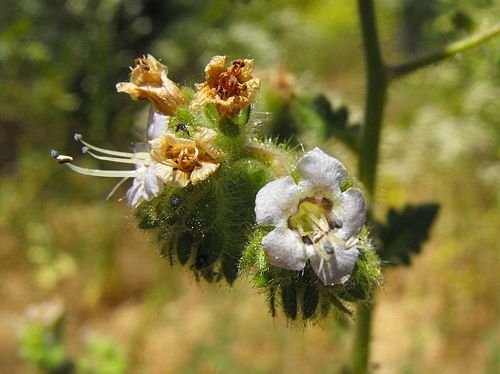
Phacelia ramosissima is a species in the Boraginaceae (Borage) family known by the common name Branching Phacelia. It is native to western North America from British Columbia to the southwestern United States, where it can be found in many types of habitats. It is variable in appearance, and there are many intergrading Varieties: In general it is a spreading or sprawling prostrate or upright perennial herb which may approach 1.5 meters in stem length. It is hairless to densely hairy, and some people detect an unpleasant odor from the glandular hairs. The leaves are 4 to 20 centimeters long and most are divided into several toothed or lobed leaflets. The flower cluster is a one-sided curving or coiling cyme of funnel- or bell-shaped flowers. Each flower is under a centimeter long and white to lavender in color with protruding stamens.
Annual herb, Perennial herb
1 - 4 ft Tall
2 ft Wide
Spreading
Summer Deciduous
Unpleasant

Lavender, White
Spring, Summer
Containers
Partial Shade
Low
Moderate
Tolerates cold to -10° F
Fast, Standing
Prefers sand or sandstone.
Soil PH: 4.0 - 8.0
14, 15*, 16*, 17*, 22, 23, 24*
Found in various settings including dunes, edges of salt marshes, coastal bluffs, canyons, washes, flats, meadows, and conifer forests
Chaparral, Coastal Strand, Red Fir Forest, Sagebrush Scrub, Yellow Pine Forest
Due to its wide distribution, it can be used with virtually any coastal, chaparral, sage scrub, or woodland plants
Butterflies and moths supported
0 confirmed and 9 likely
Geranium Plume Moth
Amblyptilia pica
Oso Flaco Flightless Moth
Areniscythris brachypteris
Orange Tortrix Moth
Argyrotaenia franciscana